© 2026 Rentokil Initial plc and subject to the conditions in the Legal statement
Introduction
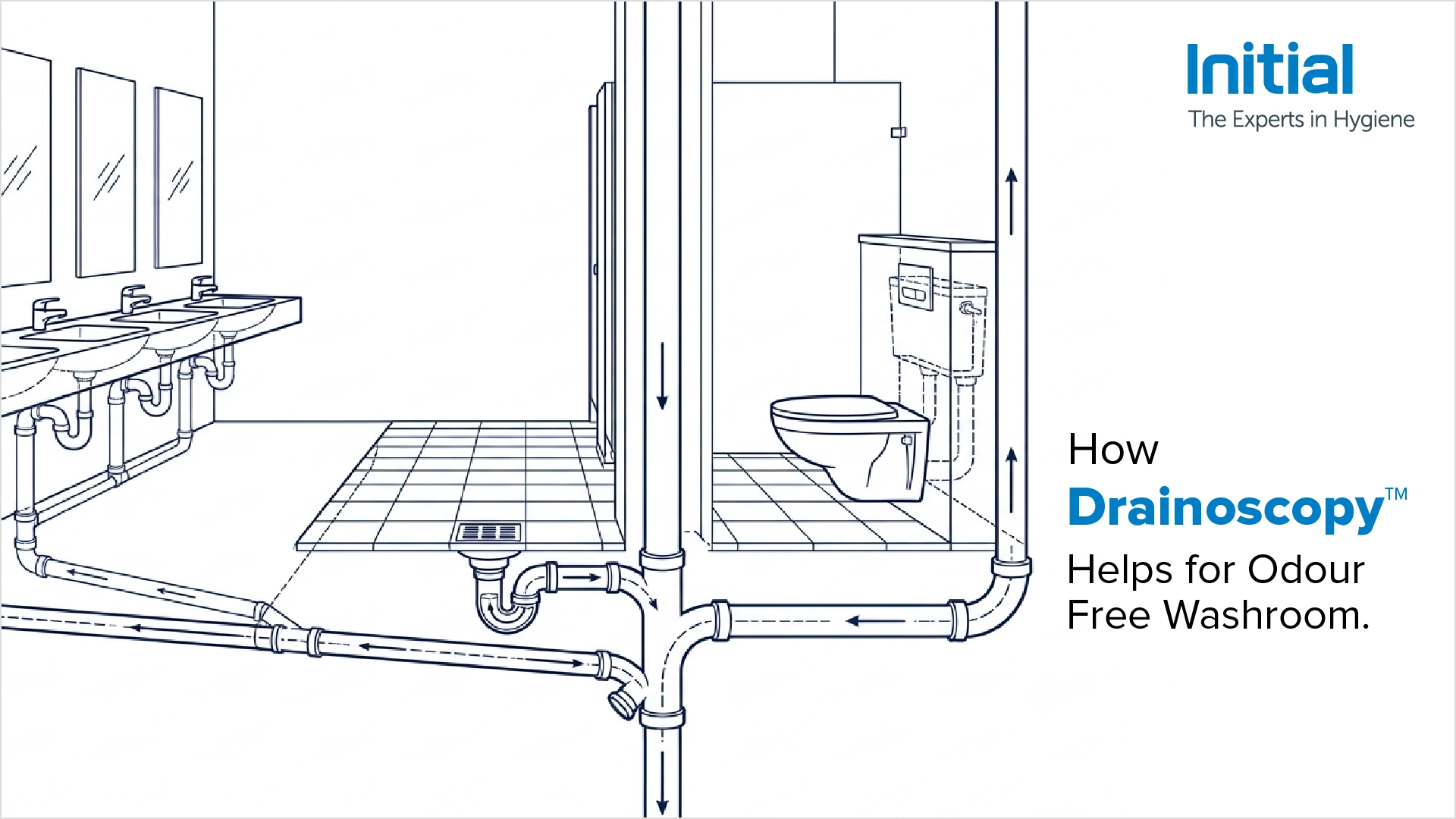
In high-traffic commercial real estate, corporate headquarters, healthcare facilities, and hospitality venues, ambient air quality is a direct indicator of facility operational standards. Among the many environmental management concerns that building engineers face, persistent sewer aromas from restrooms are one of the most elusive and harmful operational issues. Most bathroom odor problems don't come from what you can see - they come from deep inside the pipes under the floor. Though regular cleaning makes the restroom appear clean, it does not help get rid of the problems under the drain.
Drainoscopy for commercial buildings deploys the use of a camera connected to a flexible probe. The camera is put into the drainage pipes to observe what is going inside. In this blog, let us understand why drainoscopy is the secret to clean and odor-free washrooms.
Factors Causing Washroom Odors
The primary reason for washroom odors is not always poor floor cleaning. Over time, drains quietly accumulate a mix of:
● Soap residue and scum buildup
● Hair and organic matter
● Mineral deposits
● General debris and grime
In urinals, mineral and uric-acid-related deposits lead to slow drainage and unpleasant smells. Sewer gas leaking into the building through faulty drain traps is another major contributor, and this can directly compromise indoor air quality.
Because of this, effective odor control depends on identifying and fixing the underlying plumbing issue, not just masking the symptoms.
How Drainoscopy Helps?
A washroom drain inspection using a camera involves inserting a compact, waterproof camera into an accessible section of the drainage system. The camera passes through the pipe, providing a visual representation of its inside state. Instead of dumping chemicals or removing fixtures, specialists utilize a camera to identify the exact origin and location of the odor—dry traps, fractured pipes, root infiltration, grease, or scale. There is no need to break tiles or walls during the non-invasive survey.
This drain camera inspection can help maintenance teams identify:
● Blockages and accumulated debris
● Mineral or scale deposits
● Cracks or damaged sections
● Pipe deformation or displacement
● Root intrusion where applicable
● Areas of restricted water flow
● Recurring problem locations
Government drainage guidance recognizes CCTV surveys as a useful method for identifying maintenance and repair issues that cannot be easily detected from above ground.
Facility managers can use camera inspection to understand what is happening inside the pipe before deciding on the appropriate maintenance response.
Drainage Issues That Can Contribute to Odor and Pest Problems
Drainage problems can affect more than water flow and unpleasant odors. Certain defects or poorly maintained lines can also create conditions that contribute to pest activity.
| Diagnostic Metric | Potential Pest Impact | Resolution Strategy |
|---|---|---|
| Cracks & Fractures | Damaged sections can create access points or hidden voids for pests. | Structural pipe lining or localized excavation |
| Organic Sludge Build-up | Organic buildup can create favorable conditions for drain-associated pests such as drain flies and phorid flies. | Electro-mechanical descaling or high-pressure hydro-jetting |
| Displaced Joints | Gaps or damaged joints can contribute to pest access and surrounding void formation. | Joint realignment and appropriate exclusion measures |
| Dry or Uncapped Lines | Open or improperly sealed drainage lines can provide a pathway for sewer pests. | Restore water seals, cap unused lines, or install suitable exclusion devices |
(Source)
Drainoscopy for Commercial Buildings
When compared to residential washrooms, commercial washrooms experience a significantly higher usage. There are thousands of visitors who use restrooms at offices, malls, hotels, hospitals, restaurants, educational institutions, and other facilities daily.
This high level of usage will gradually lead to small deposits and blockages, converting them to recurring drainage problems. This is why commercial drain cleaning should ideally be part of a preventive maintenance strategy rather than something performed only after a complete blockage occurs.
A proactive approach can also support better facility pipe maintenance by helping teams document recurring problem areas and plan maintenance based on actual pipe conditions
Key Takeaways
Odor-free restrooms go beyond the use of strong air fresheners. They are about carefully analyzing what happens inside the pipes. Drainoscopy provides much-needed visibility, transforming reactive facility pipe repair into a planned, cost-effective program. Combining regular drain camera inspections with planned cleaning will help ensure odor-free washrooms.
Are you ready to eliminate washroom scents at their source?
Drainoscopy is a non-invasive drain inspection method that uses a small waterproof camera attached to a flexible probe to examine the inside of drainage pipes. It helps identify blockages, deposits, cracks, damaged sections, restricted flow, and other plumbing issues that may contribute to washroom odors.
Yes. A drain camera inspection can help locate drainage problems that may contribute to persistent odors, including buildup, damaged pipes, restricted flow, and other plumbing issues.
A drain camera inspection can identify blockages, mineral deposits, debris, cracks, damaged or displaced pipes, root intrusion where applicable, and areas of restricted water flow.
Commercial washrooms experience high daily usage, which can contribute to the accumulation of soap residue, hair, organic matter, mineral deposits, debris, and other buildup inside drainage pipes. Drain trap problems and damaged plumbing can also contribute to unpleasant odors.
By showing the actual condition of drainage pipes, drainoscopy helps facility teams identify recurring problem areas and make more informed decisions about cleaning, repairs, and ongoing pipe maintenance.
Washroom hygiene
Create confidence and reassurance in your workplace with the range of innovative and hygiene washroom solutions.
- End to end range of washroom products, equipment and services
- Market leading washroom provider supporting Indian businesses for over 50 years
- Washroom servicing available throughout India through our wide network of branches