© 2026 Rentokil Initial plc and subject to the conditions in the Legal statement
Introduction
Every year during the monsoons, business structures confront considerable obstacles. Heavy rainfall, high humidity, and variable temperatures can all reveal latent faults in drainage systems and HVAC ducts. Blocked drains cause flooding, whereas infected air ducts can transmit mold spores, unpleasant aromas, and poor indoor air quality.
However, there are two camera-based inspection techniques - drainoscopy and ductoscopy that give facility managers a way to find these problems before the first heavy rain. For teams responsible for commercial building maintenance, these tools shift the game from reactive emergency callouts to planned, documented prevention.
In this blog, let us throw light on drainoscopy and ductoscopy and find out how they can help prevent monsoon disasters.
About Drainoscopy
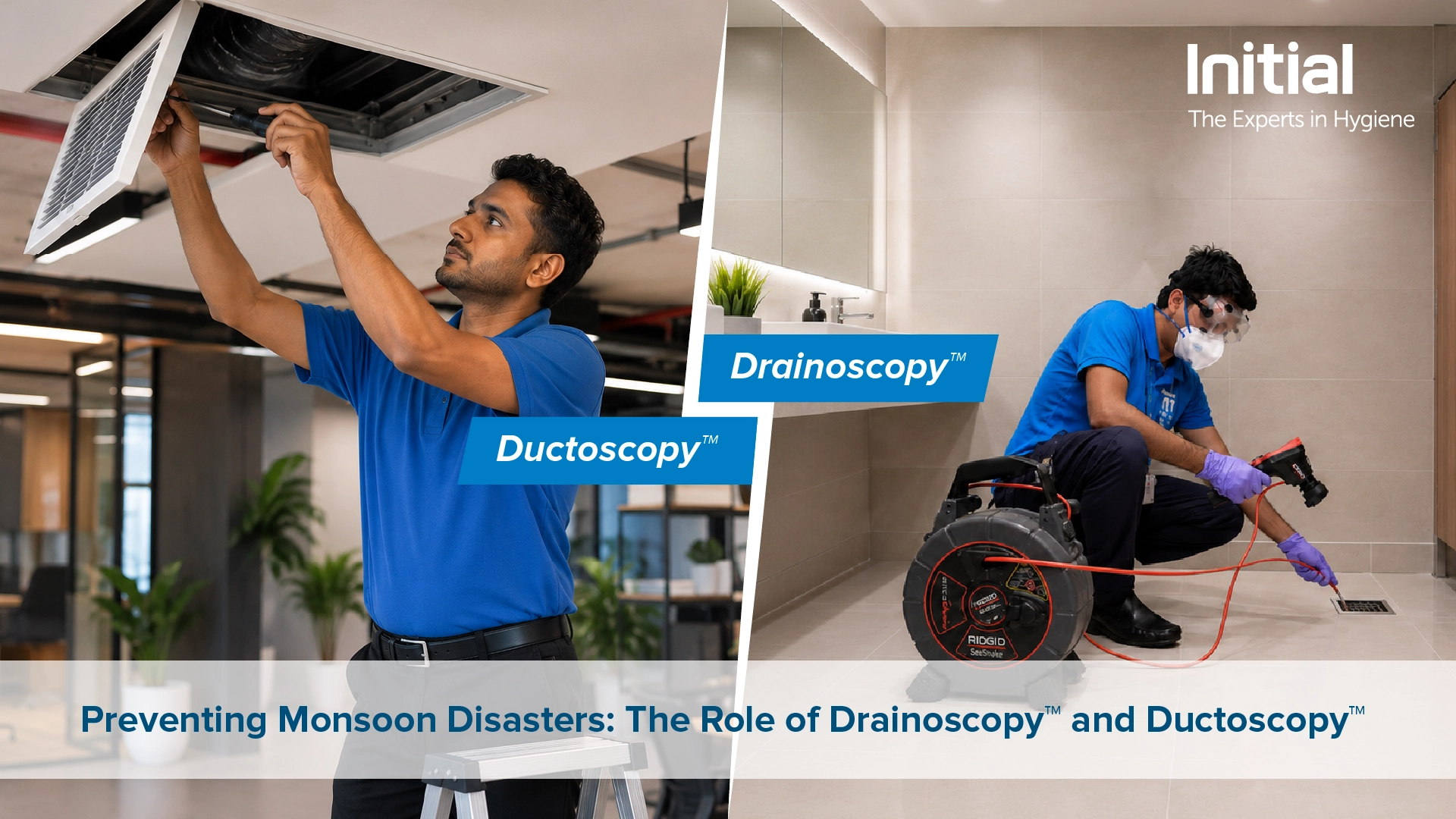
Drainoscopy is a video inspection of drain and sewer lines. It is a waterproof, high-resolution camera mounted on a flexible push-rod that sends live footage to a monitor. This allows technicians to detect fractures, root infiltration, grease accumulation, misaligned joints, and silt before they cause a blockage. Furthermore, it allows them to mark the exact position and depth for precise repair.
According to India's National Disaster Management Authority (NDMA) National Guidelines on Management of Urban Flooding, unmaintained drains are a major cause of urban flooding, along with improper solid waste disposal and construction debris dumping. The guidelines require all major drains to be desilted before the monsoon season each year.
Why is it essential?
● Proactive Clearing: Helps detect partial blockages which enables a drain cleaning appointment before the entire system fails.
● Structural Integrity: It detects damaged or misaligned pipes that could cause basement flooding or foundation damage after heavy rains.
About Ductoscopy
Drains control water, whereas your HVAC system maintains the environment. Ductoscopy is the use of micro-cameras to inspect the inside of your air conditioning ducts. During the rainy season, high humidity often promotes mold growth in these underground pathways.
Ductoscopy is the borescope or camera inspection of HVAC and AC ductwork. A flexible fiber-optic camera is inserted through existing access points to reveal the interior of duct runs, air handlers, coils, and drain pans without dismantling the system. Because ducts extend into walls, ceilings, and plenums, much of the system is otherwise invisible.
Monsoon humidity is exactly what makes ductoscopy valuable. AC duct cleaning in conjunction with a previous ductoscopy is critical for various reasons:
- Odor Control
- Reduction of Health Risks
Why Monsoon Makes These Inspections Important
Commercial structures face higher dangers during the rainy season because water and humidity exacerbate existing maintenance difficulties.
1. Prevents drain blockages
Small blockages frequently go missed in dry conditions. However, if heavy rains start, partially clogged drains can quickly overflow, causing waterlogging near entrances, basements, parking lots, and service rooms. Drainoscopy enables maintenance workers to arrange drain cleaning before the drainage system reaches capacity.
2. Reduces Water Damage
Overflowing drains can damage flooring, electrical systems, walls, furniture, and valuable equipment. If preventive inspections are taken it can allow facility managers to repair weak sections before expensive emergency repairs become necessary.
3. Improves Indoor Air Quality
Humidity trapped inside HVAC systems creates ideal conditions for mold and bacteria. Ductoscopy will help whether AC duct cleaning is required and remove contaminants before they circulate throughout the building.
4. Eliminates Persistent Monsoon Odors
One of the most prevalent complaints during the wet season is foul odors emanating from drains or air conditioning units.
These smells mainly come from:
- Organic waste inside the drains
- Standing water
- Mold growth
- Bacterial buildup
Professional monsoon odor control begins with identifying the source, rather than hiding the stink. Drainoscopy and Ductoscopy enable this by detecting concealed contaminants inside drainage and ventilation systems
Conclusion
In conclusion, drainoscopy and ductoscopy provide an accurate, non-invasive way to detect monsoon related drain issues before they escalate into flooding, foul odors, mold growth, or expensive repairs. By incorporating these regular inspections, businesses can improve monsoon odor control, maintain healthier indoor environments, and ensure uninterrupted operations throughout the rainy season.
Washroom hygiene
Create confidence and reassurance in your workplace with the range of innovative and hygiene washroom solutions.
- End to end range of washroom products, equipment and services
- Market leading washroom provider supporting Indian businesses for over 50 years
- Washroom servicing available throughout India through our wide network of branches