© 2026 Rentokil Initial plc and subject to the conditions in the Legal statement
Introduction
The air we breathe subtly influences our emotions, memories, and productivity through fragrance. In homes, offices, and commercial spaces, managing scents means eliminating bad odors and introducing pleasant ones. While active scent systems exist, passive fragrance delivery, using natural "AirFlow," offers an elegant and sustainable alternative.
This method leverages chemistry, physics, and design, relying on natural air currents to create a subtle, steady aroma without mechanical force. Let's explore how passive dispensers use air currents to fill a room with scent, showcasing the art of unassisted fragrance delivery.
How Scent Delivery Systems Work?
Scent delivery systems, whether passive or active, function by transforming liquid fragrance compounds into airborne particles that can be inhaled and detected by our olfactory receptors.
Here's a breakdown of how different scent delivery systems work, along with the underlying scientific principles:The method of this transformation varies based on the delivery system used:
1. Passive Scent Delivery Systems
These systems operate effectively without external power sources, harnessing the natural release of volatile fragrance molecules into the air. This is achieved through several key mechanisms:
- Diffusion - Fragrance molecules gradually disperse into the air, moving from areas of high concentration (such as diffusers or gels) to lower concentration zones in the surrounding environment.
- Evaporation - Liquid fragrances convert to vapor at room temperature, with evaporation rates influenced by temperature, humidity, and surface area, allowing for a seamless release of scent.
- Capillary Action - Systems like reed diffusers and wicks draw liquid fragrance upward through porous materials, allowing it to reach the surface and evaporate gracefully into the air.
These passive systems offer energy-efficient solutions that are easy to maintain, capable of providing an extended scent release lasting from weeks to months.
2. Active Scent Delivery Systems
Active systems enhance scent distribution by utilizing external power sources, such as electricity or batteries. These innovative methods include:
- Aerosol Sprays - Pressurized containers that release fragrance droplets into the air upon activation, either manually or automatically, ensuring a quick scent boost.
- Ultrasonic Nebulizers - Devices that transform liquid fragrance into a fine mist through high-frequency sound waves, commonly utilized in essential oil diffusers for a refreshing ambiance.
- Heat-Based Devices - Systems that warm fragrance oils or wax, facilitating faster evaporation and intensifying scent output for a richer experience.
- Fan-Driven Systems - Devices that leverage airflow to circulate scents rapidly and evenly across larger spaces, ensuring a consistent aromatic environment.
Active systems provide users with enhanced control over scent distribution, featuring options like timers, intensity adjustments, and programmable settings, though they do necessitate regular maintenance and energy use.
Understanding Passive Fragrance Delivery
Passive fragrance delivery releases scent using natural processes like evaporation, diffusion, and air convection, without mechanical or electronic aid (fans, heaters, pumps). Unlike active systems, they require no electricity, making them energy-efficient and low-maintenance. Ideal for subtle, continuous aroma without noise, examples include:
-
Reed Diffusers: A container holds essential oils, and natural reeds absorb the oil, gradually dispersing the scent into the air.
-
Porcelain Diffusers: Made from porous clay, these diffusers soak up essential oils and slowly release their fragrance over time.
-
Pluggable Diffusers: These devices warm a cotton pad infused with essential oils, gently spreading the aroma throughout the space.
The Science of Evaporation and Diffusion: How Scent Travels
At the heart of passive fragrance delivery lies the interplay of two fundamental scientific phenomena: evaporation and diffusion.
Evaporation: Fragrance compounds are, by definition, volatile organic compounds (VOCs). This means they have a relatively low boiling point and readily transition from a liquid or solid state into a gaseous state at ambient temperatures. The rate of evaporation is influenced by several factors, including:
Vapor Pressure: Higher vapor pressure means faster evaporation.
Surface Area: Larger exposed surface area increases molecule escape. Passive dispensers use extensive wicking or porous materials for this.
Temperature: Warmer ambient temperatures boost molecule kinetic energy, speeding up evaporation.
Air Movement (Air Flow): Crucial for passive delivery; it removes evaporated molecules, preventing saturation and promoting continuous scent release.
Diffusion: Once fragrance molecules evaporate into the air, they begin to spread out from areas of higher concentration to areas of lower concentration. This process, known as diffusion, is driven by the random motion of molecules. While diffusion occurs even in still air, it is a relatively slow process for distributing scent across a large space. This is where the role of AirFlow becomes paramount.
The Benefits of Passive Fragrance Delivery
Passive fragrance delivery systems are increasingly popular, especially in commercial settings, due to their many advantages:
-
Subtle & Consistent Scent: Creates a continuous, non-overwhelming aroma.
-
Cost-Effectiveness: Energy-efficient with low maintenance, leading to reduced operating costs.
-
Environmentally Friendly: Sustainable choice due to reduced energy use and often recyclable components.
-
Whisper-Quiet: Operates silently, ideal for noise-sensitive environments.
-
Enhanced User Experience: Improves mood, reduces stress, and boosts perceived cleanliness.
-
Reduced Allergy Concerns: Slow release minimizes airborne scent concentration, lowering allergy risk.
A Sustainable Scent Solution: Signature AirFlow Scent
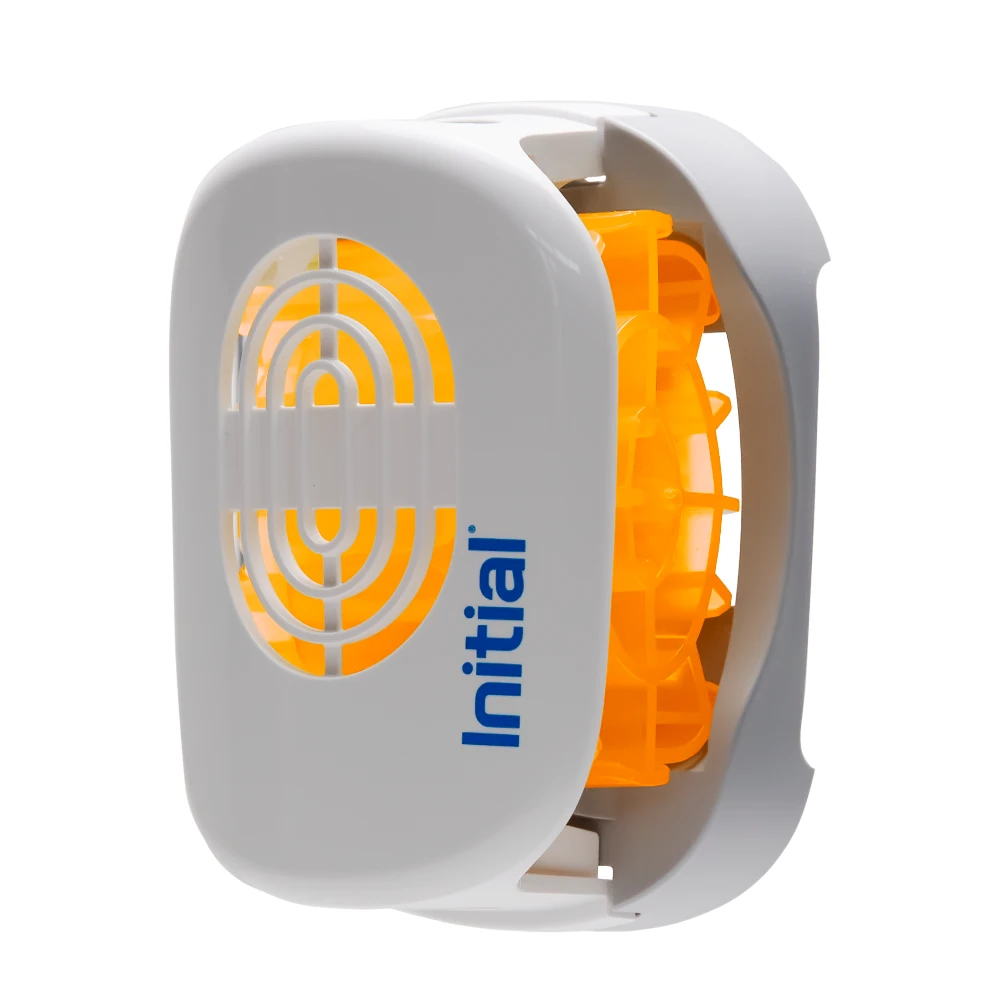
For businesses looking to implement a high-performing passive solution, Signature AirFlow Scent offers an innovative answer. Purpose-built for small washrooms and single cubicles, it uses nothing more than ambient airflow to disperse fragrance - eliminating the need for batteries, electricity, aerosols, or propellants.
This thoughtfully engineered product features:
-
A cartridge with 17 scent-emanating tunnels
-
Hardware crafted from 70% post-consumer recycled plastic, making it a more sustainable choice.
-
Volatile Organic Compounds reduction of up to 70% (by removing the need for a propellant fragrance dispersion, Signature AirFlow Scent reduces Volatile Organic Compounds by 70% compared to standard 250ml aerosols)
-
Two distinctive scent options
-
Continuous fragrance for up to eight weeks (in washrooms up to 15m³). The performance may vary depending on room size, environment and climate)
If you’re ready to upgrade to a fragrance solution that is low-maintenance, eco-conscious, and effective - Signature AirFlow Scent delivers on every front.
Conclusion
Passive fragrance delivery transforms scientific principles into a delightful sensory experience. Like a car gel pod or reed diffuser, these systems use chemistry and physics to elegantly scent spaces without power or flame.
Leveraging airflow, passive delivery combines evaporation and diffusion with smart design. Signature AirFlow Scent, for instance, uses a solid, refillable cartridge with engineered tunnels—no liquids, wicks, or gels—demonstrating a sophisticated understanding of scent dispersal.
Signature Airflow Services
Signature AirFlow Scent keeps small washrooms smelling pleasant and inviting without needing batteries, electric power sources, propellants or aerosols. Its unique design optimizes fragrance dispersion via airflow, creating a continuous scent for up to eight weeks.
- Available with a choice of two exciting scents
- Unique cartridge features 17 scent-emanating tunnels that increase airflow
- Reduces VOCs by up to 70% when compared to aerosol fresheners