© 2026 Rentokil Initial plc and subject to the conditions in the Legal statement
Introduction
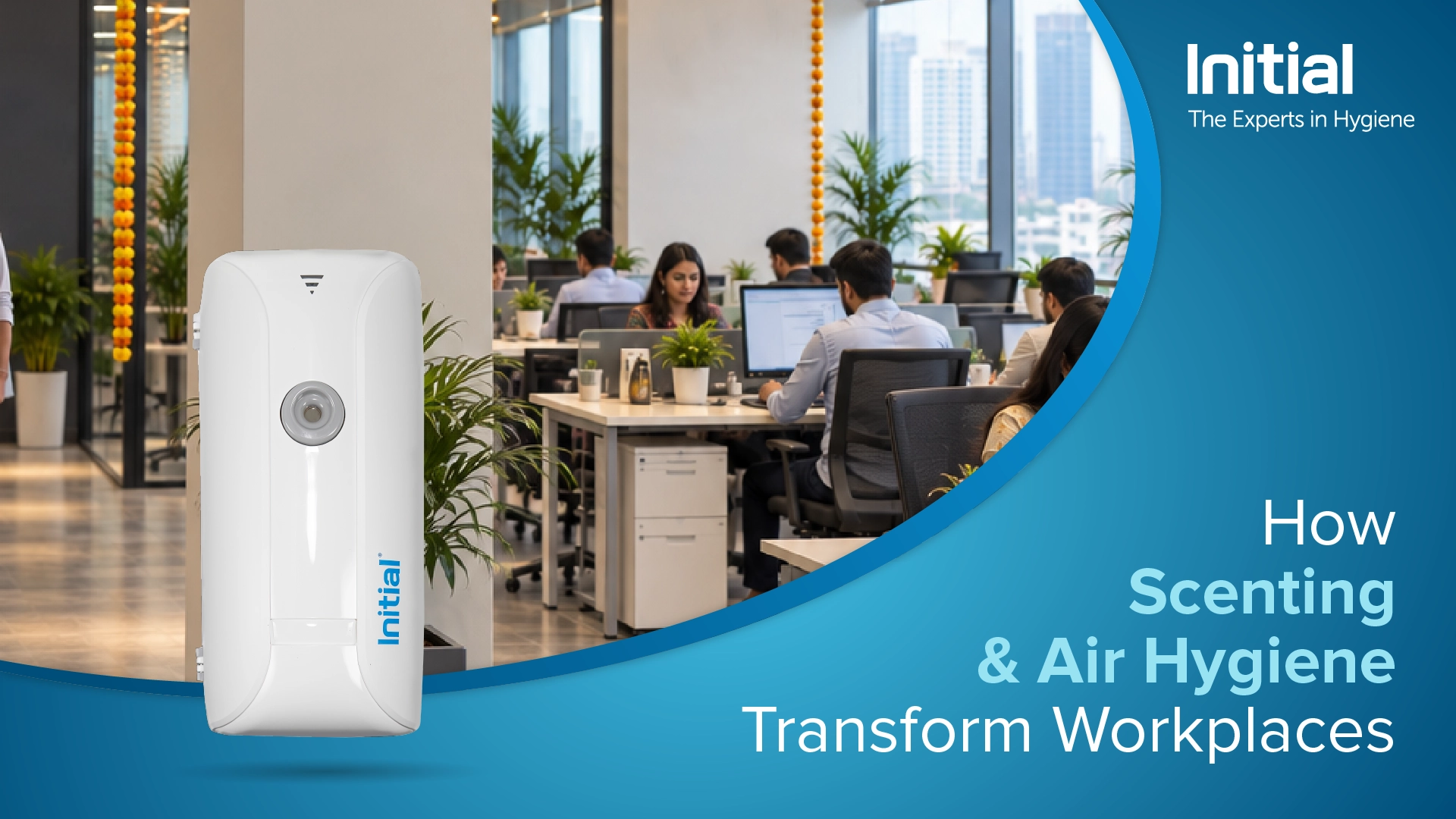
The first impression when we enter any workplace is shaped by the environment around us. The quality of indoor air, the presence of unwanted odors, and the overall freshness of a space can influence how employees and visitors experience a workplace.
This is why businesses are increasingly combining commercial air hygiene solutions with corporate office scenting to create spaces that feel fresh, comfortable, and well managed.
However, scenting and air hygiene serve different purposes. Air hygiene focuses on factors such as pollutant sources, ventilation, filtration and air cleaning, while commercial scenting is designed to create a controlled and consistent fragrance experience. Used together, they can become part of a broader workplace hygiene and facility-management strategy.
In this blog, let us understand how commercial scenting and air hygiene can transform corporate environments and how businesses can approach them effectively.
What Is Commercial Air Hygiene?
Commercial air hygiene refers to the practices and technologies used to support better indoor air quality in workplaces and other commercial environments.
Indoor air quality can be influenced by several factors, including:
- Ventilation
- Indoor pollutant sources
- Filtration and air cleaning
- Temperature and humidity
- HVAC design, operation and maintenance
- Occupancy and building use
According to the U.S. Environmental Protection Agency (EPA), three basic strategies for improving indoor air quality are source control, improved ventilation, and air cleaners or filtration. You can learn more about improving indoor air quality directly from the EPA.
This means effective commercial air hygiene should begin with understanding and managing the factors affecting the air, rather than simply masking unwanted odors.
What Is Corporate Office Scenting?
Corporate office scenting involves the controlled use of fragrance in commercial spaces through professional scent diffusion systems.
Businesses may use scenting in areas such as:
- Reception areas and lobbies
- Meeting and waiting areas
- Corridors and elevators
- Employee common areas
- Hospitality spaces
- Commercial restrooms
The purpose is not to replace air quality management, but to create a consistent sensory environment that complements the overall workplace experience.
When implementing corporate office scenting, businesses should consider the type and intensity of the fragrance, the size and purpose of the space, ventilation, placement of the diffuser, and the sensitivity of occupants.
For a deeper look at the role of fragrance in the workplace, businesses can also explore Initial's article on the science of scent and workplace fragrance.
Commercial Scenting vs. Air Hygiene: What's the Difference?
Although the two solutions can work together, they address different aspects of the workplace environment.
| Commercial Scenting | Commercial Air Hygiene |
|---|---|
| Focuses on controlled fragrance | Focuses on indoor air quality |
| Supports the sensory experience | Addresses indoor air quality factors |
| Can contribute to brand ambience | Involves source control, ventilation and filtration |
| Uses professional scent diffusion systems | May involve HVAC, filtration and air cleaning measures |
| Should complement air quality measures | Forms part of the foundation for better indoor air |
Build the Foundation: Start With Indoor Air Quality
Before introducing a signature fragrance into a workplace, organizations should first understand the quality of the existing indoor environment.
The EPA recommends addressing indoor air quality through a combination of source control, ventilation, and filtration or air cleaning.
1. Control the Source
Identify and reduce potential sources of unwanted pollutants and odors. These may include waste, moisture, food related odors, certain products, building materials or poorly maintained equipment.
Source control is important because introducing fragrance does not address the underlying source of an odor.
2. Improve Ventilation
Adequate ventilation helps bring outdoor air into occupied spaces and can help dilute indoor pollutants.
The CDC's National Institute for Occupational Safety and Health (NIOSH) recommends maintaining ventilation systems according to applicable building requirements and provides guidance on improving air circulation in workplaces.
3. Use Appropriate Filtration and Air Cleaning
Filtration and air cleaning technologies can supplement source control and ventilation. Their suitability depends on the building, HVAC system, pollutants being addressed and the technology selected.
CDC/NIOSH guidance also identifies filtration and air cleaning as approaches that can support cleaner indoor air.
4. Maintain HVAC Systems
HVAC systems play an important role in how air is distributed, filtered and exchanged within a building. Regular inspection and preventive maintenance can help support the intended operation of these systems.
The CDC recommends considering the building, HVAC system and occupancy type when evaluating ventilation improvements and advises consulting qualified professionals for certain HVAC interventions.
The Power of Corporate Office Scenting
Once the fundamentals of indoor air quality have been addressed, businesses can consider corporate office scenting as another element of the workplace experience.
A carefully selected fragrance can contribute to how a space is perceived and can become part of a company's overall environmental and brand experience.
Some potential applications include:
- Creating a consistent ambience across multiple locations
- Supporting a welcoming reception or lobby experience
- Helping differentiate customer facing environments
- Creating a consistent sensory identity for a brand
- Complementing an overall cleanliness and hygiene program
However, scent selection should be approached carefully. A fragrance that feels pleasant at one intensity may become distracting at another. Businesses should therefore consider scent intensity, placement, ventilation, space occupancy and occupant sensitivity when designing a scenting program.
Odor Control and Restroom Care
Restrooms, cafeterias and other high traffic areas can present different hygiene and odor management challenges.
Effective commercial air odor control should begin by identifying the source of the odor. Cleaning, waste management, ventilation and appropriate maintenance are important parts of the solution. Fragrance can then be used as a complementary measure where appropriate.
Modern facilities can also incorporate automated washroom air care and touchless hygiene systems to support consistent service standards.
Why Are Touchless Air Hygiene Systems Useful?
Touchless systems can reduce the need for users to interact directly with shared dispensing surfaces. Automated dispensing can also support consistent delivery and simplify routine maintenance when incorporated into an appropriate hygiene program.
However, touchless equipment should complement, not replace, regular cleaning, replenishment and maintenance.
Businesses can also consider broader workplace washroom hygiene measures, covering hand hygiene, cubicle hygiene, odor control and air hygiene.
Support Smarter Workplace Hygiene
Air hygiene should be treated as part of a broader workplace hygiene program rather than as an isolated activity.
A comprehensive approach can include:
- Indoor air quality assessment
- Ventilation and HVAC maintenance
- Appropriate filtration
- Odor source identification
- Restroom hygiene
- Touchless dispensing
- Commercial scenting
- Scheduled inspection and maintenance
This approach helps organizations address both the underlying environmental factors and the overall experience of employees and visitors.
How to Build a Corporate Air Hygiene Strategy
Businesses can follow a structured approach when developing a workplace air hygiene program.
| Step | What to Assess | Recommended Action |
|---|---|---|
| 1. Assess | Ventilation, HVAC, filtration, humidity and occupancy | Identify potential air quality and odor concerns |
| 2. Identify | Restrooms, cafeterias, reception areas and high traffic zones | Map areas requiring additional attention |
| 3. Control | Odor and pollutant sources | Address the underlying source rather than masking it |
| 4. Improve | Ventilation and filtration | Review HVAC operation and suitable air cleaning measures |
| 5. Introduce | Scent profile, intensity and placement | Implement commercial scenting where appropriate |
| 6. Maintain | Equipment, consumables and occupant feedback | Establish regular inspection and maintenance schedules |
A Complete Approach to Corporate Air Hygiene
Commercial scenting and air hygiene work best when treated as complementary elements of an integrated facility strategy.
Businesses can start by improving ventilation and source control, assessing problem areas, maintaining HVAC systems, and selecting appropriate filtration or air cleaning technologies. Commercial scenting can then be incorporated to create a consistent and considered sensory experience.
This approach helps companies move beyond simply making an office smell good. It creates an environment that feels fresh, comfortable, hygienic and thoughtfully managed.
Are you looking to upgrade your office atmosphere? Consider conducting a professional indoor air quality assessment to take the first step toward a fresher, more comfortable workplace.
Commercial scenting is the controlled use of fragrance in business environments through professional scent diffusion systems. It can be used to create a consistent sensory experience across offices, reception areas, hospitality spaces and other commercial environments.
Not by itself. Scenting and indoor air quality management serve different purposes. Indoor air quality should be addressed through measures such as source control, ventilation, filtration and appropriate air cleaning. Fragrance can complement these measures but should not replace them.
Air purification or air cleaning is intended to remove or reduce certain pollutants or particles from indoor air, depending on the technology used. Air freshening or scenting primarily introduces fragrance to influence how a space smells and is perceived. They should therefore not be treated as interchangeable solutions.
Touchless systems can help reduce direct contact with shared dispensing surfaces and support consistent dispensing. They work best when integrated with regular cleaning, replenishment and maintenance procedures.
A practical starting point is to assess pollutant sources, ventilation, filtration, HVAC operation and moisture or humidity conditions. The EPA recommends combining source control, improved ventilation and air cleaning or filtration as core strategies for improving indoor air quality.
For workplace ventilation, businesses should also consider applicable building and ventilation requirements and professional HVAC guidance. The CDC provides additional guidance on ventilation mitigation strategies, including air circulation and air cleanliness.
Commercial Scenting
Create a memorable and welcoming environment with professional scenting solutions designed for offices and commercial spaces.
- Tailored fragrance solutions for your business
- Consistent scent coverage across your space
- Professional servicing and maintenance