myInitial
myInitial login© 2026 Rentokil Initial plc and subject to the conditions in the Legal statement
Incontinence is a widespread condition affecting more than one million New Zealanders across all ages, life stages, and professions. Despite its prevalence, it often remains an unspoken challenge in commercial environments. Modern employers are recognising that inclusive workplace wellbeing must extend into cubicle design. Safe and dedicated incontinence disposal is fundamental to fostering workplace dignity, personal comfort, and physical accessibility. When commercial facilities lack dedicated disposal units, staff and visitors are frequently forced to wrap products in toilet paper and place them into open paper-towel bins, or worse, attempt to flush them. Providing discreet, dedicated receptacles removes everyday anxiety and signals genuine corporate empathy.
Failing to implement specialised receptacles creates significant operational problems across corporate offices, industrial sites, and customer facilities. Without dedicated incontinence waste disposal systems, facilities managers frequently face costly maintenance issues and hygiene failures.
Plumbing blockages: Bulky incontinence pads and adult nappies do not disintegrate like toilet paper, causing severe pipe obstructions and costly emergency drainage callouts.
Odour accumulation: Standard communal rubbish bins lack sealed internal containment, allowing stale odours to escape and degrade the washroom atmosphere.
Cross-contamination risks: Manual rubbish bin lids require direct contact, turning everyday touchpoints into hot spots for cross-infection in high-traffic cubicles.
Employee dissatisfaction: Staff who encounter unmanaged bins or a lack of disposal options face unnecessary embarrassment, reducing morale and daily comfort.
True inclusion requires looking past traditional washroom assumptions. Historically, sanitary units have been confined to female cubicles, leaving male and gender-neutral facilities unequipped. However, men undergoing prostate treatment or managing age-related health changes urgently require appropriate disposal solutions. Installing specialised incontinence bins for workplaces inside all cubicles - including male, female, and accessible washrooms - ensures that everyone receives equal respect. Normalising these amenities removes the social stigma around bladder weakness and reinforces an organisation's commitment to modern diversity standards.
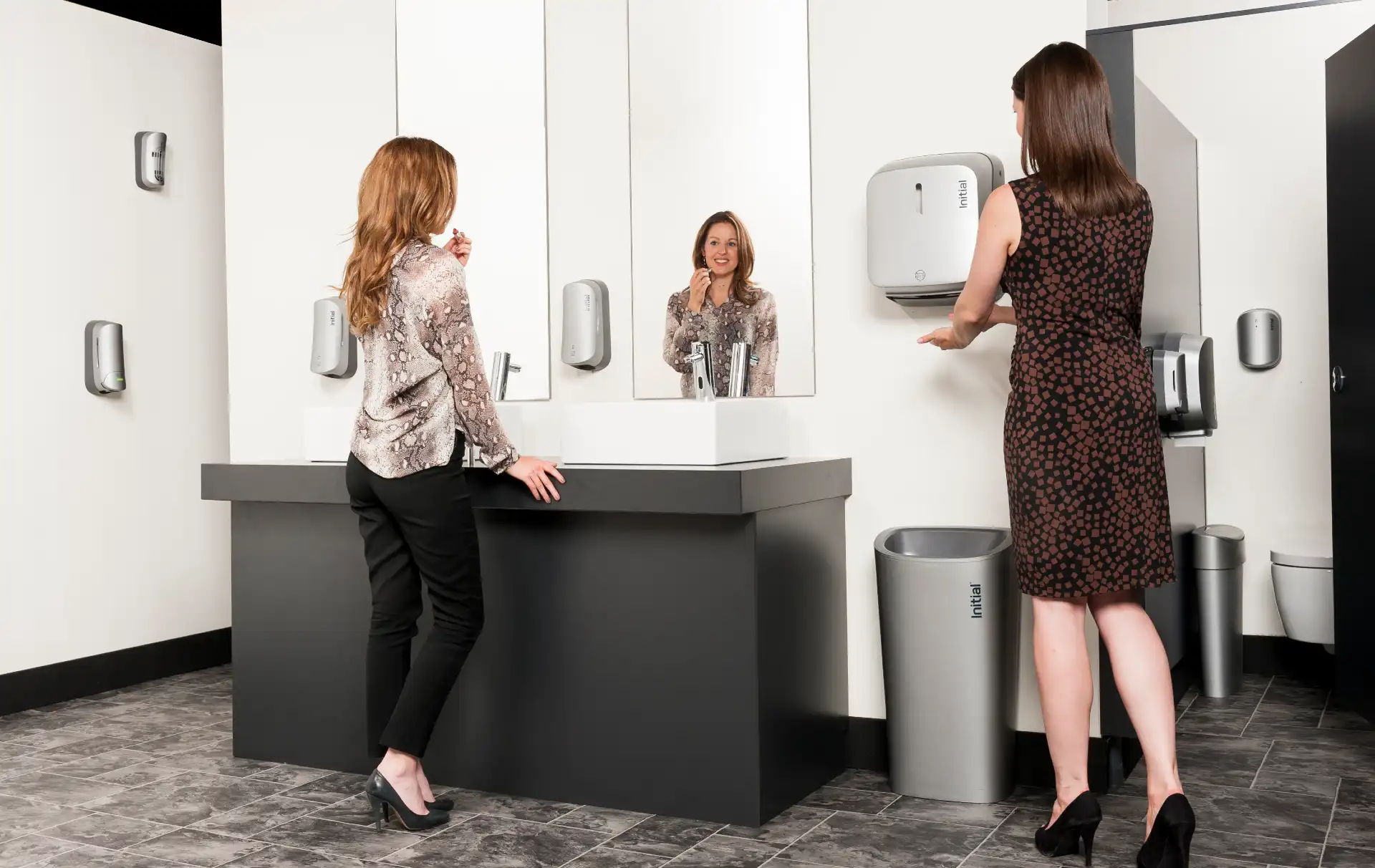
Commercial hygiene receptacles have advanced far beyond basic plastic dustbins. Initial designs purpose-built solutions that combine visual discretion with rigorous infection control technology. When procuring incontinence disposal bins, businesses should prioritise engineered features that uphold washroom standards.
Touch-free sensors: Hands-free infrared lid operation prevents physical contact with the unit, significantly reducing bacterial transmission between users.
Antimicrobial protection: Surfaces infused with silver-ion technology actively inhibit the growth of bacteria and microbes on the exterior of the bin.
BioFresh odour control: Specially formulated odour-neutralising inserts work continuously inside the unit to eradicate unpleasant smells at a molecular level.
Discreet modesty trays: Internal concealment flaps prevent washroom occupants from seeing previously deposited waste whenever the lid opens.
Workplace hygiene practices in New Zealand are governed by occupational health standards and regional waste management bylaws. Absorbent hygiene waste cannot be treated like ordinary municipal paper rubbish due to biological risk factors. Contracting a certified hygiene specialist ensures that all washroom waste is handled in strict compliance with local environmental guidelines and health codes. Professional disposal processes prevent cross-contamination, streamline workplace audits, and support sustainability goals through safe transport and regulated processing routes.
Attempting to service hygiene bins with internal cleaning teams can stretch resources and expose personnel to occupational health risks. Choosing a professional managed service from Initial provides commercial businesses with a dependable, end-to-end washroom management framework.
Scheduled technician visits: Trained hygiene technicians perform discreet unit swaps and sanitisation at intervals matched to workplace foot traffic.
Integrated scenting solutions: Premium air care and scenting systems pair seamlessly with hygiene hardware to maintain fresh, inviting washroom air.
Duty of care assurance: Complete tracking records verify that commercial waste is handled and processed according to New Zealand regulatory standards.
Sleek architectural design: Compact, ergonomic units fit cleanly alongside cubicle pans without restricting legroom or physical movement.
Proactive washroom management reflects an organisation's core culture, operational excellence, and commitment to people. By introducing specialised incontinence solutions and partnering with experienced hygiene professionals like Initial, New Zealand businesses can guarantee a clean, dignified, and supportive washroom environment for every employee and visitor.
Initial New Zealand supplies and services a wide range of soaps, sanitisers and sanitiser stand equipment. Get in touch today on 0800 736 865 or contact us here for a free, no-obligation assessment of your current clinical & medical waste processes.
Create confidence and reassurance in your workplace with the range of innovative and hygiene washroom solutions.