myInitial
myInitial login© 2026 Rentokil Initial plc and subject to the conditions in the Legal statement
Commercial washrooms present one of the most complex epidemiological challenges in any facility. High foot traffic, constant moisture, and organic soilage create an ideal breeding ground for resilient bacteria.
While traditional cleaning methods certainly have their place, they often fall short of delivering true biological decontamination. Facility managers across Australia are increasingly asking for a solution that is both scientifically rigorous and environmentally responsible. The answer lies in the physics of thermodynamics.
Why steam cleaning is revolutionising how we protect staff, visitors, and customers in modern businesses?
When assessing the hygiene health of a commercial facility, it is vital to distinguish between what is visibly clean and what is clinically safe. High-touch fixtures like tapware, flush buttons, and cubicle handles undergo continuous bacterial shedding throughout the day. Standard cleaning regimens often rely heavily on mops, microfibre cloths, and liquid chemical disinfectants. While these tools have their place, they introduce distinct structural vulnerabilities when deployed in high-pressure commercial spaces.
Microscopic contamination: Visibly spotless surfaces frequently harbour hidden pathogens, including Escherichia coli and Staphylococcus aureus.
Bacterial harbourages: Porous tile grout and micro-fissures in ceramic surfaces provide safe havens where bacteria actively multiply out of reach of standard wipes.
Cross-contamination risks: Traditional mops and cloths can inadvertently transfer pathogens between cubicles if they are not fastidiously managed and color-coded.
Chemical accumulation: Over-reliance on heavy detergents leaves a sticky, invisible layer that attracts subsequent dirt and can trigger respiratory sensitivities in sensitive users.
To understand how vaporised water eliminates microscopic threats, we must look at the laws of thermal dynamics. Professional steam units generate dry saturated steam at temperatures exceeding 100°C under immense pressure. This method moves away from chemical toxicity, relying instead on pure physical energy to destroy pathogens at a cellular level. It provides an unyielding line of defence that standard manual scrubbing simply cannot replicate.
Intense heat delivery: The application of ultra-high-temperature steam instantly transfers lethal thermal energy directly into the targeted microbes.
Protein denaturation: The extreme heat breaks down the fragile structural bonds holding cellular proteins together, causing them to unfold and coagulate.
Cellular collapse: This rapid, irreversible alteration of the cell's internal machinery leads to immediate, absolute pathogen inactivation.
Zero microbial resistance: Because steam is a physical eradication method rather than a chemical one, bacteria cannot adapt or develop evolutionary resistance to it.
One of the greatest challenges in modern steam cleaning hygiene is conquering washroom biofilms. In damp environments, bacteria do not exist as isolated, vulnerable entities. Instead, they colonise surfaces by secreting a sticky, protective matrix composed of extracellular polymeric substances. This layer shields the underlying pathogens, rendering standard liquid sanitisers largely ineffective because the liquid cannot easily penetrate the dense barrier.
The biofilm shield: This resilient matrix glues bacteria tightly to porcelain urinals, stainless steel troughs, and floor tiles, extending their lifespan.
Thermal disruption: The combined impact of high temperature and concentrated pressure easily dissolves the lipid and protein components of the biofilm.
Exposing the threat: By vaporising the protective shield, steam exposes hidden pathogens directly to lethal temperatures, ensuring a 99.9% elimination rate.
Odour elimination: Steam forces out deep-seated uric acid salts and embedded grime from grout lines, permanently removing the primary source of foul washroom smells.
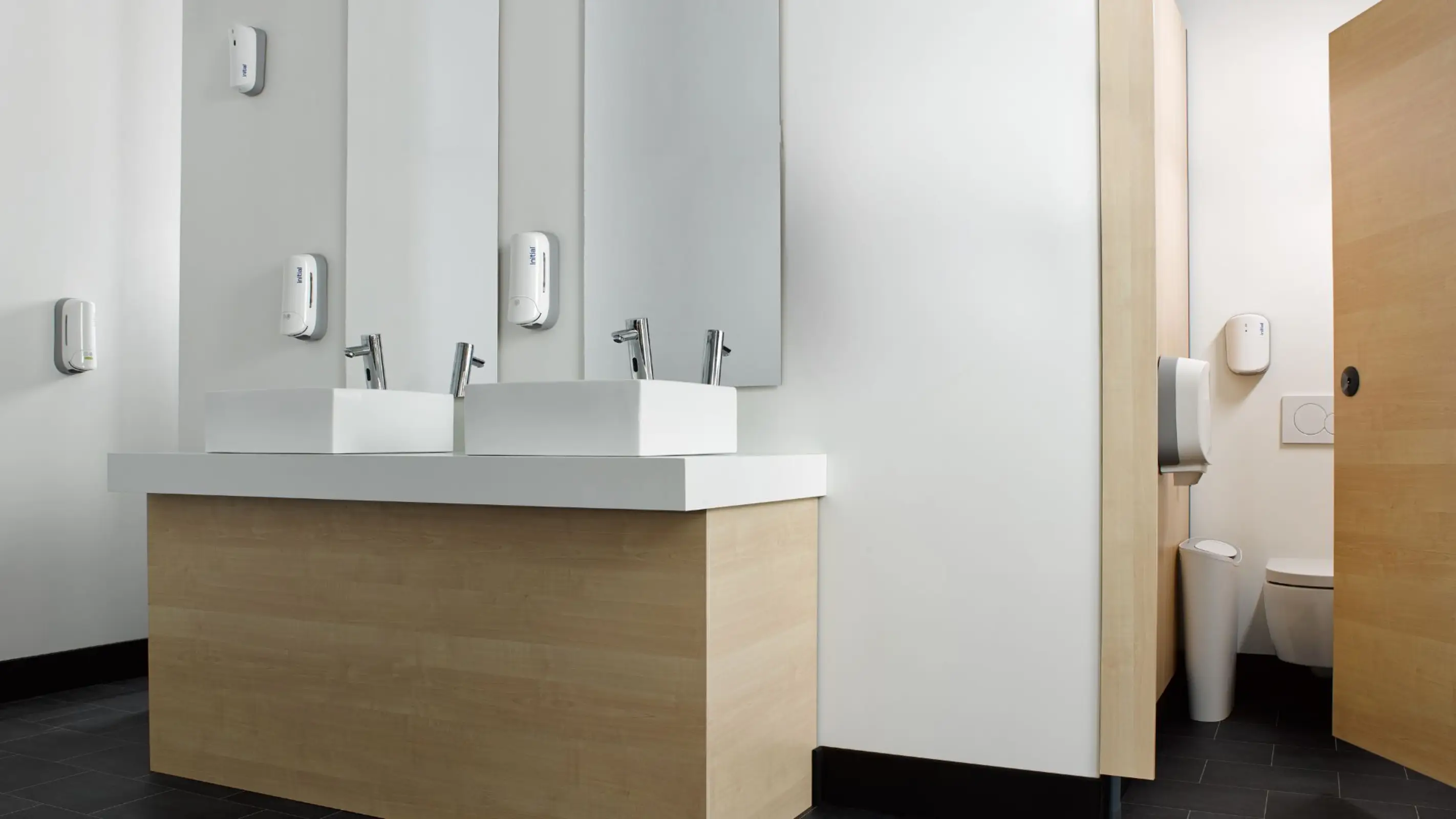
When assessing facility health, we must look beyond surface micro-biology and consider the atmospheric environment. Traditional deep cleaning heavily relies on heavy detergents and synthetic masking fragrances laden with volatile organic compounds (VOCs). These airborne irritants can linger in enclosed washroom spaces, triggering asthma and skin sensitivities among occupants. By pivoting to advanced thermal sanitation, we fundamentally improve the indoor air profile of the facility.
Eradication of toxic VOCs: Replacing harsh chemical aerosolisation with vaporised water ensures that washroom users are not exposed to lingering respiratory irritants.
True odour destruction: Rather than masking unpleasant scents with synthetic perfumes, steam completely obliterates the volatile organic compounds and bacteria causing the malodour.
Particulate suppression: The humidity profile of dry steam helps precipitate airborne dust and microscopic allergen particles out of the breathing zone, making the air noticeably cleaner.
From an asset management perspective, commercial washrooms represent a major capital investment. Frequently flooding these spaces with highly acidic or alkaline chemical cleaners accelerates the degradation of expensive infrastructure. Over time, chemicals can pit stainless steel, discolour porcelain, and dissolve tile grouting. Steam provides an incredibly gentle yet highly effective alternative that safeguards your property assets.
Non-corrosive sanitation: The neutral pH of pure vaporised water means it will not tarnish chrome fittings, brush stainless steel, or etch natural stone surfaces.
Grout line preservation: Avoids the chemical erosion that slowly strips away tile sealants, preventing structural water ingress and costly future repairs.
Elimination of surface scaling: Steam safely dissolves hard water minerals and limescale buildup without the need for abrasive scrubbing pads that scratch and dull fixtures.
Standard cleaning routines often suffer from a phenomenon known as "focal neglect." While toilet bowls and basins receive meticulous care, complex or less obvious areas are often overlooked. Pathogens rapidly accumulate in these intricate geometric zones. Initial’s targeted steam cleaning protocols ensure that no microscopic harborages are left unaddressed.
Intricate hinge and lock penetration: The fluid dynamics of pressurised vapor allow it to wrap around complex door hinges, locks, and underside grab rails where cloths cannot effectively reach.
Ventilation grille decontamination: Effortlessly clears dust and sanitises exhaust fan covers, stopping the recirculation of airborne bacteria throughout the facility.
Silicone and rubber seal remediation: Penetrates and purges the flexible seals around cubicle walls and vanity units, which are notorious for trapping moisture and cultivating black mould.
To implement truly effective washroom cleaning solutions, a program must be both hygienically sound and operationally viable. Traditional deep-scrubbing routines are incredibly labor-intensive and require significant downtime, often rendering facility facilities unusable for hours. Embracing a steam vaporisation framework allows commercial enterprises to streamline their maintenance workflows while achieving superior biological outcomes.
Drastic water reduction: Steam technology uses up to 95% less water than traditional high-pressure hosing or repetitive mopping, representing significant resource savings.
Reduced facility downtime: Because dry steam contains very little liquid water, treated areas dry almost instantly, allowing the washroom to be safely reopened to the public within minutes.
Simplified inventory requirements: Eliminating the need for a complex array of specialised chemical cleaners reduces ordering overheads, storage footprint, and chemical handling risks for staff.
While the science behind thermal disinfection is absolute, the efficacy of the treatment relies heavily on the expertise of the operator and the precision of the equipment. Off-the-shelf steam mops or untrained internal cleaning staff simply cannot deliver the consistent pressure and temperature required to achieve absolute sanitisation. At Initial, we provide a fully managed, professional steam cleaning service that removes the operational burden from your business while guaranteeing measurable, clinically clean results.
When you partner with Initial, you are not just hiring a cleaning service; you are investing in a tailored bio-security framework backed by global research and local Australian expertise.
Certified hygiene technicians: Our specialist teams undergo rigorous, ongoing training in pathogen control, risk assessment, and bio-hazard mitigation, ensuring your facilities are handled with the highest level of professional care.
State-of-the-art commercial technology: We utilise advanced, industrial-grade steam equipment capable of maintaining constant temperatures above 100°C under high pressure, targeting areas that standard cleaning completely misses.
Tailored hygiene audits: We do not believe in a one-size-fits-all approach. Initial conducts comprehensive site audits to identify high-risk bacterial hot spots in your specific washrooms, designing a customized service schedule that matches your foot traffic and compliance requirements.
Integrated hygiene ecosystems: Our steam cleaning services integrate seamlessly with our wider range of hand hygiene, air purification, and cubicle sanitisation solutions, creating an impenetrable, multi-layered defence against workplace illness.
Steam cleaning represents the gold standard in physical sanitisation—shattering biofilms, eradicating 99.9% of bacteria, and preserving your facility's infrastructure without ecological harm.
Initial Hygiene is the leading air, hand, surface, and washroom provider of hygiene. Constantly, innovating to meet the demand of businesses and all commercial environments. Get in touch today on 1300 043 018 or contact us here for a Free on-premises Hygiene Audit.
Your local waste disposal professionals All Initial technicians are highly qualified and trained. Our local teams offer a wide range of global innovations and waste disposal solutions.