myInitial
myInitial login© 2026 Rentokil Initial plc and subject to the conditions in the Legal statement
Office washrooms are shared by dozens—sometimes hundreds—of people every day, yet they’re often one of the most underestimated risk areas in the workplace. Many businesses assume that regular cleaning is enough to maintain good office hygiene, but in reality, several hidden hygiene risks are frequently overlooked.
These gaps don’t just affect cleanliness—they can impact staff health, morale, compliance and how your business is perceived by visitors and clients. Professional hygiene services are designed to address exactly these risks, filling the spaces that routine cleaning misses.
Here are the most common washroom hygiene risks offices overlook—and why they matter.
One of the biggest hygiene risks in office washrooms is poor waste management. Sanitary bins, general waste bins and paper towel bins can quickly become breeding grounds for bacteria if they are not serviced often enough.
Common issues include:
overflowing bins during busy periods
lingering odours that affect washroom comfort
bacteria growth inside poorly maintained units
cleaning staff handling waste without proper containment
Professional hygiene services ensure bins are sealed, hands-free, regularly serviced and safely emptied—reducing contamination risks and improving overall washroom hygiene.
Office washrooms contain more high-touch points than almost any other area of the workplace. These include:
door handles and locks
flush buttons
tap handles
soap and paper dispensers
bin lids
Even when washrooms look clean, these surfaces can harbour germs that spread illness quickly. Traditional cleaning schedules may not target these touchpoints frequently enough, especially in high-traffic offices.
Touch-free systems and targeted hygiene services significantly reduce this risk by minimising contact and ensuring regular sanitisation.
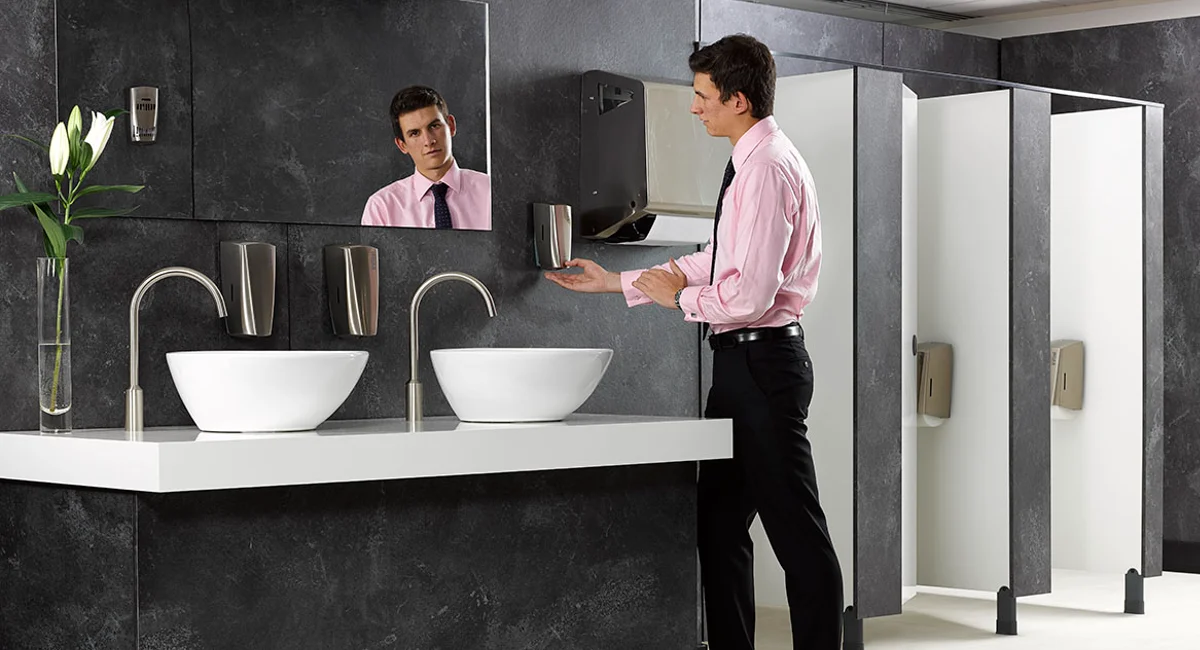
Hand hygiene is one of the most effective ways to prevent illness in the workplace—but it only works if the right products are available at all times.
Overlooked risks include:
empty soap or sanitiser dispensers
broken or unreliable units
harsh soaps that discourage regular use
poor placement of hygiene products
When employees can’t wash or sanitise their hands properly, office hygiene standards drop immediately. Hygiene services ensure dispensers are functional, well-stocked and positioned where they’re needed most.
Odours are often treated as a cosmetic issue, but persistent smells usually indicate deeper hygiene risks. These may include:
bacteria build-up in bins or drains
poor air circulation
infrequent waste removal
plumbing issues caused by improper disposal
Unpleasant odours don’t just affect comfort—they also influence how clean a workplace feels. Visitors and staff often associate bad smells with poor hygiene standards, even if surfaces appear clean.
Odour-control systems and air-care solutions are a critical part of modern office hygiene strategies.
Many office washrooms are not designed to meet the needs of all users. Overlooked hygiene risks include:
lack of sanitary bins in female or unisex washrooms
no discreet disposal for incontinence products
bins placed in inconvenient or exposed locations
When inclusive hygiene needs are ignored, employees may resort to flushing products or disposing of them incorrectly—creating plumbing problems, odour issues and contamination risks.
Inclusive hygiene services support dignity, compliance and better washroom hygiene overall.
Ironically, cleaning itself can become a hygiene risk if not done correctly. Using the same cloths, gloves or tools across multiple areas can spread bacteria rather than remove it.
Professional hygiene services reduce this risk by:
providing sealed, managed waste systems
reducing the need for cleaners to handle contaminated waste
supplying touch-free equipment
ensuring specialist servicing is done by trained technicians
This protects both washroom users and cleaning staff.
Many offices rely on daily or weekly cleaning schedules, assuming that hygiene issues won’t arise between visits. In reality, washrooms can deteriorate quickly—especially during peak office hours or large meetings.
Overlooked risks include:
empty consumables
full bins
odour build-up
broken dispensers
Hygiene services provide ongoing monitoring, scheduled servicing and proactive maintenance to prevent these issues before they affect staff or visitors.
Office washrooms are often used by clients, partners and job candidates. Poor washroom hygiene sends a strong negative message about attention to detail, professionalism and care for people.
Even small issues—like unpleasant smells or empty soap dispensers—can undermine your brand image and workplace credibility.

Good office hygiene requires more than surface cleaning. Hidden risks such as poor waste management, empty dispensers, odour build-up and neglected high-touch surfaces can quietly undermine staff health and business reputation.
By partnering with professional hygiene services, offices can address these overlooked risks, maintain consistently clean washrooms and create environments that support wellbeing, inclusivity and professionalism.
Clean washrooms aren’t just a facilities issue—they’re a reflection of how a business values its people.
Initial Hygiene is leading the way air, hand and surface hygiene innovation to meet the demand of any environment. Get in touch today on 1300 73 1234 or contact us here for free, no obligation assessment of your current hygiene services.
Create confidence and reassurance in your workplace with the range of innovative and hygiene washroom solutions.