myInitial
myInitial login© 2026 Rentokil Initial plc and subject to the conditions in the Legal statement
In fast-paced medical environments, healthcare personnel must maintain their primary focus on patient care rather than administrative overhead. A streamlined protocol for handling hazardous materials allows doctors, nurses, and support staff to maintain seamless operational focus throughout their shifts. Efficient handling of biohazardous items eliminates operational bottlenecks in treatment rooms and corridors, establishing an orderly workplace where staff move freely between critical duties. By implementing structured routines for managing hazardous byproducts, commercial medical facilities significantly reduce non-clinical staff burdens while safeguarding the continuous flow of daily healthcare delivery.
Maintaining uncompromising hygiene standards is essential to preventing healthcare-associated infections and protecting vulnerable patients. Standardised collection protocols prevent the hazardous accumulation of infectious items across busy treatment bays and procedure rooms.
Clinical waste collection schedules ensure dangerous materials are removed systematically before capacity limits are reached in high-traffic medical zones.
Clinical waste handling practices incorporate touchless, hands-free foot-pedal mechanisms that prevent cross-contamination between staff, equipment, and patients.
Clinical waste disposal processes follow rigorous sanitisation workflows to keep medical environments sterile, clean, and fully compliant.
Australian healthcare providers operate under stringent environmental and public health mandates regarding biohazardous materials. Failing to adhere to state and federal waste regulations exposes commercial facilities to severe legal liabilities, financial penalties, and reputational damage. Initial provides complete auditing and documentation tracking from the point of generation through to final treatment, giving facility management total operational confidence. Standardised collection schedules and certified chain-of-custody documentation ensure that medical practices remain fully compliant with relevant environmental protection authority guidelines without diverting clinical teams from primary healthcare tasks.
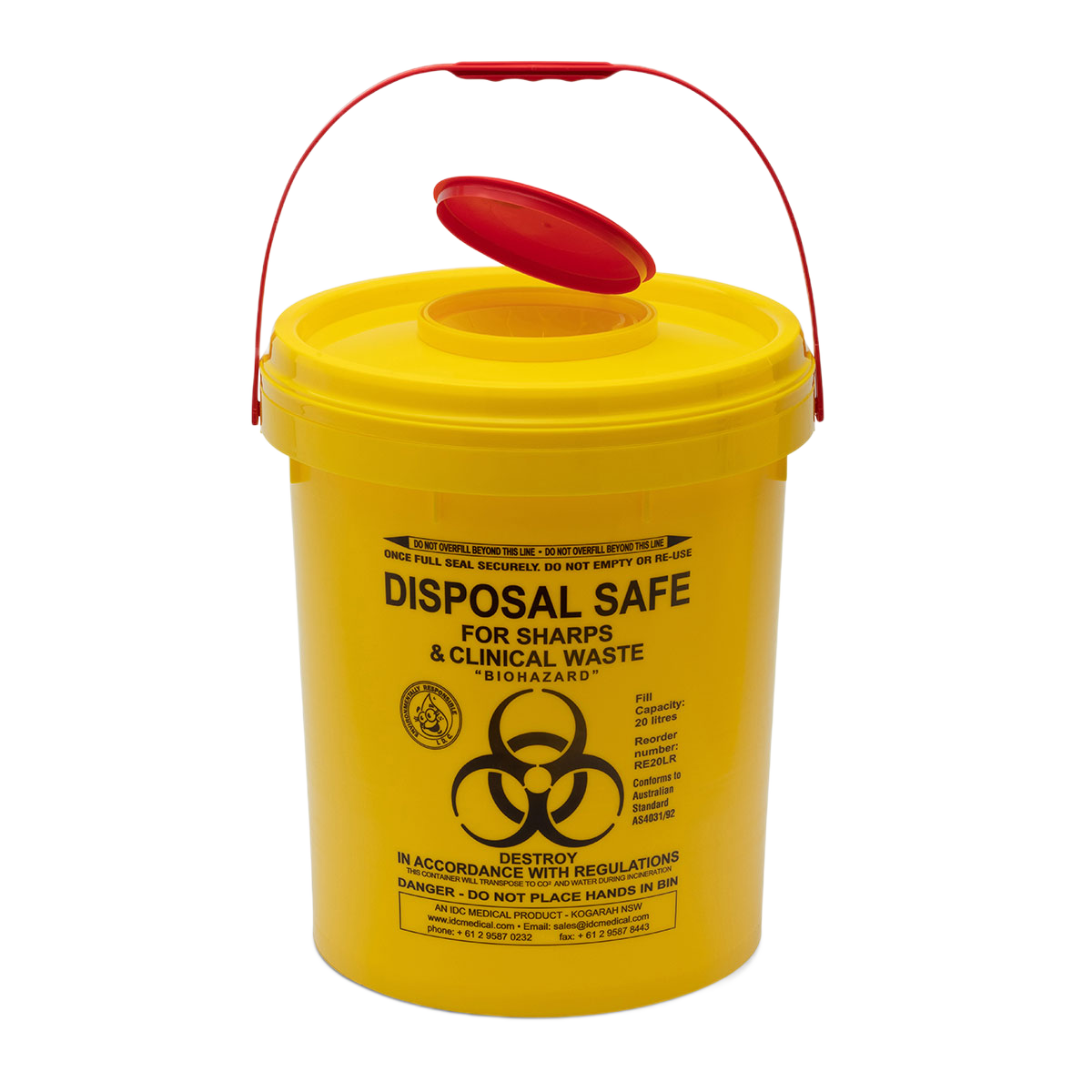
Modern medical facilities frequently face physical spatial constraints while needing to segregate various categories of healthcare materials safely. Strategic placement of purpose-built containment units transforms workspace organisation and minimises physical obstruction in operating theatres and examination rooms.
Clinical waste bins featuring hands-free pedal operation reduce direct contact points and uphold stringent workplace health and safety protocols.
Segregation protocols utilising clear, colour-coded systems ensure hazardous items are correctly categorised right at the point of origin.
Ergonomic designs fit neatly into compact clinical footprints while maximising internal volume for efficient daily facility operations.
Disruptions in medical operations often occur when routine maintenance tasks intersect unexpectedly with peak patient consultation hours. Unpredictable waste clearance routines can lead to overcrowded holding areas, unpleasant odours, and elevated occupational hazards. Partnering with a dedicated service provider ensures that pickups occur reliably during off-peak times or according to tailored operational schedules. This predictability allows facility managers to allocate support staff resources far more effectively, ensuring that personnel are never diverted from urgent core duties to resolve logistical backlogs.
Sustainable practice is increasingly vital for modern Australian commercial healthcare institutions seeking to reduce their overall environmental impact. Advanced disposal techniques convert hazardous residues into inert energy sources or minimal environmental impact end-products while meeting regulatory compliance.
Clinical waste disposal methods utilise high-efficiency treatment technologies to neutralise biohazards cleanly and safely.
Resource recovery initiatives focus on reducing total volume delivered to landfills through precise segregation strategies across all departments.
Clinical waste management reporting provides actionable insights to track waste reduction targets across small practices and large hospital networks alike.
Operational efficiency in healthcare relies on a harmonious balance between high-quality patient care, regulatory compliance, and streamlined facility logistics. Integrating professional waste management solutions eliminates systemic bottlenecks and strengthens infection control practices across every department. Initial partners with healthcare organisations to deliver tailored, fully compliant clinical waste services designed to keep facilities running smoothly and safely. To discover how Initial can elevate your facility's operational efficiency and hygiene standards, contact our specialist team today.
Initial supplies and services a wide range of waste management systems across sharps, sanitary waste, clinical and medical. Get in touch today on 1300 187 162 or contact us here for free, no obligation assessment of your current clinical & medical waste processes.
Your local waste disposal professionals All Initial technicians are highly qualified and trained. Our local teams offer a wide range of global innovations and waste disposal solutions.