English
Take me to the site© 2026 Rentokil Initial plc and subject to the conditions in the Legal Statement.
One of today’s most pressing issues is air pollution, affecting local and global populations alike. Hong Kong is committed to taking action under the Paris Agreement. In 2017, Hong Kong released the Climate Action Plan 2030+ and committed to peak carbon emissions by 2020 and to reduce them by 26-36% from 2005 levels by 2030, and ultimately achieve zero carbon emissions by 2050.
Indoor air quality (IAQ) is an essential issue in China and in particular, Hong Kong, which has grown to be one of the busiest and highly densely populated cities in the Greater Bay Area and in the world. IAQ can have significant impacts on the health and well-being of building occupants. Poor IAQ can result from various factors, including high levels of pollutants and contaminants in the air, inadequate ventilation, and the use of certain materials and products that emit harmful chemicals.
In 2003, the Environmental Protection Department issued Guidance Notes for the Management of Indoor Air Quality in Offices and Public Places, launched a voluntary IAQ certification scheme for recognizing good IAQ management practices, and provided incentives for owners of premises/buildings or property management companies to pursue the best level of IAQ. At the same time, The EPD also established IAQ Objectives for office buildings and public places.
However, although an interactive website is provided to educate kids on the importance of IAQ, detailed guidance or school IAQ standard is missing in this long-term strategy of improving IAQ in public areas. In 2011, the Audit Commission noted that the guidance notes included office buildings and some public places, but not schools.
In recent years, comparative risk studies performed by EPA(US Environmental Protection Agency) and its Science Advisory Board (SAB) have consistently ranked indoor air pollution among the top five environmental risks to public health.
Failure to prevent or respond promptly to IAQ problems can increase long and short-term health problems for students and staff, and aggravate asthma and other respiratory illnesses. Nearly 1 in 13 children of school age has asthma, the leading cause of school absenteeism due to chronic illness. There is substantial evidence that indoor environmental exposure to allergens, such as dust mites, pests and molds, plays a role in triggering asthma symptoms. These allergens are common in schools.
According to Guidelines on Prevention of Communicable Diseases in Schools published by CHP, the main air-borne diseases in HK schools are Pulmonary tuberculosis, Measles, and Chickenpox. Besides, viruses like COVID-19, influenza and RSV are also considered the main reasons causing absenteeism of kids. That is what our children are facing in everyday school life, making IAQ management and monitoring exceedingly important.
The education environment has a critical influence on the health and wellbeing of students. It has been well-known for decades that poor air quality in educational environments impacts students’ learning. A large body of research shows that poor ventilation and pollution, which is highly prevalent around urban schools, have significant effects on children’s health, academic performance and wellbeing. Teachers and other staff are affected by poor indoor air quality (IAQ) too, and they also have a right to a safe working environment.

Most people can remember sitting in stuffy classrooms and feeling drowsy at certain times of the day. That was probably the result of a lack of “fresh” air and a build-up of CO2 exhaled in people’s breath because of a lack of ventilation. CO2 is just one of the pollutants recorded as having high levels in schools.
Indoor air quality is affected by three main factors:
Schools in towns and cities are subject to high levels of pollution in the surrounding area.
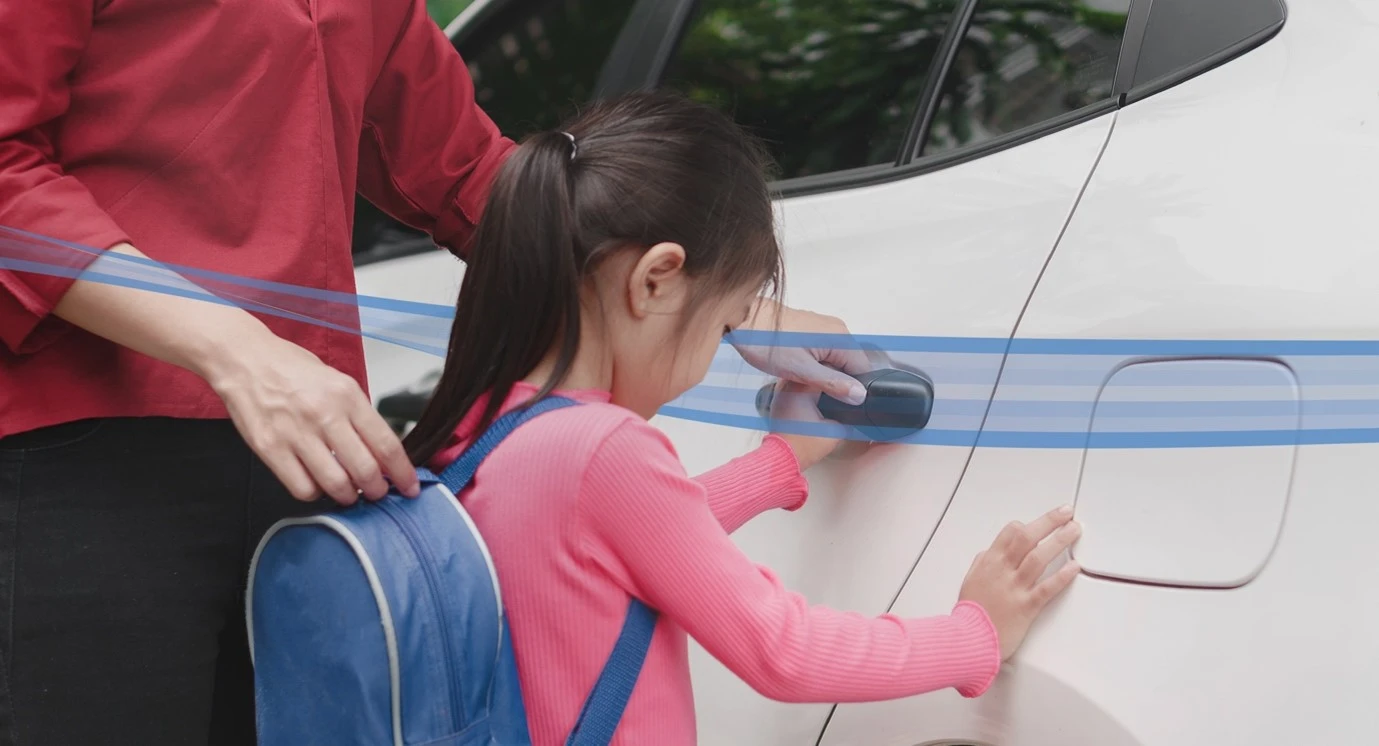
Poor indoor air quality is caused by numerous pollutants coming from both outdoor and indoor sources. Vehicles congregating in front of schools at the start and finish of the school day are a major source of pollution affecting children in schools. Parents’ vehicles emit exhaust fumes into the local air, adding to the other local traffic, industrial and environmental pollution such as wind-blown soil and fires.
Indoor air pollutants can be classified into volatile organic compounds (VOCs), inorganic, particulate and biological.
There is a large number of VOCs that can pollute indoor air. Some are regulated in many countries, such as the carcinogens formaldehyde and benzene, but other toxic compounds are not regulated yet. These include pesticides, flame retardants, PCBs and phthalates that are present in many manufactured products.
Inside schools, building materials, paints, flooring, furniture, cleaning products, electronic equipment and many types of products used in teaching, including art and science materials, are sources of VOCs.
Humans emit a range of VOCs from their bodies and body products they have used, such as soaps and perfumes. The high density of people in a school can result in people being a major source of VOCs.
The most critical inorganic pollutants that cause poor air quality are nitrogen dioxide, carbon dioxide, carbon monoxide, ozone and radon. They have various effects ranging from eye, nose and throat irritation, headaches, respiratory damage and cardiovascular diseases to brain damage and cancers.
Particulate matter comprises airborne solid or liquid particles from a wide range of natural, industrial and other human-derived sources, especially vehicle exhausts and other combustion products. They can be composed of hundreds of different chemicals, minerals and organic matter, including multiple toxins and allergens.
They are generally classified into three sizes: coarse (PM10), fine (PM2.5) and ultrafine (PM1.0), according to the particle diameter in microns. All sizes can enter the lungs; the smallest ones can enter the small airways and pass into the blood and to multiple organs in the body. Particulates are linked to a wide range of diseases, from respiratory and heart diseases to diabetes.
Biological pollutants indoors consist of allergens and microorganisms. Allergens are derived from pollen, animal dander, dust, mites, cockroaches, some plants, fungi and microorganisms. Viruses and bacteria are carried indoors mainly by people, on and in their bodies, clothing and shoes, but are also carried in windblown particles that enter buildings.
Moulds are created by damp areas in buildings and high air humidity caused by leaks and poor ventilation. These create conditions where moulds can proliferate on surfaces and in materials, producing airborne spores, which are particulates, and VOCs emitted by the decaying materials.

Children are particularly vulnerable to air pollution because their bodies are still developing. Younger children, especially, have an underdeveloped or compromised immune system. While children are still growing, their lungs are larger in proportion to their body size. Children also breathe more rapidly than adults. So relative to their blood volume and body size, their intake of toxins is greater and they absorb a greater concentration of pollutants.
Small children spend more time close to the floor because of their height and activities, making them more expoosed to pollutants in dust settled on the floor and disturbed by classroom activities – especially their own. These pollutants can include dust mites, pet allergens, fungal spores, pollen and plant debris, soil and industrial and vehicular particulates brought in from outdoors.
Research over decades has shown that poor indoor air quality in schools has various effects on children’s health, ability to learn and academic performance.
The US EPA reviewed the scientific literature on the impact of air quality on academic performance and categorised the results from many research papers:
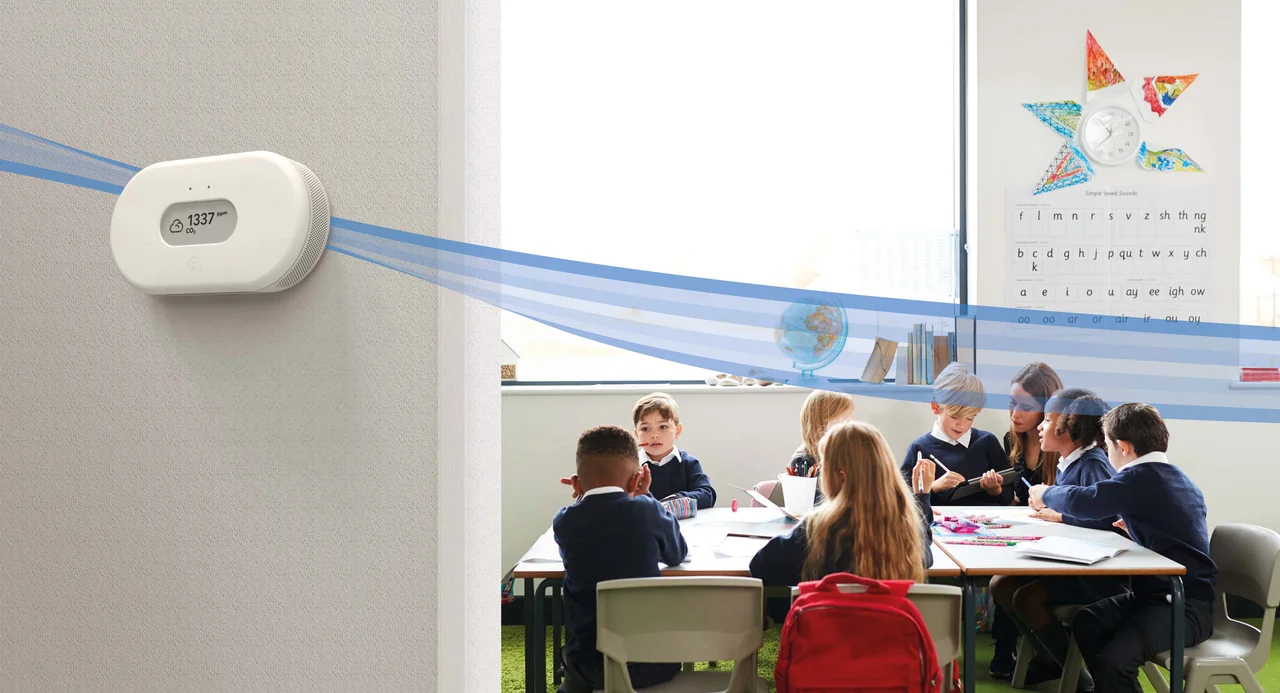
Educational establishments can take various actions, including indoor air quality monitoring, improving ventilation and placing portable air purifiers in rooms.
The first step in improving air quality is to monitor it so you know what factors are critical in each room. Typically, the values measured are CO2, VOCs, particulates, humidity and temperature. This allows you to both plan the most effective long-term measures and indicate what immediate action can be taken for people in the room when critical air quality levels are reached. Air quality monitoring devices that sense multiple pollutants and continuously record the data are about the size of a smartphone and are easy to place on the wall of a room.
The benefits of monitoring are:
There are three measures building managers can take to improve indoor air quality.
Overall, it appears that the issue of IAQ is being taken seriously in Hong Kong, with various organizations and initiatives working to promote sustainable building practices and improve the quality of the indoor environment. However, it is always important to continue to monitor IAQ and address any concerns that may arise to ensure that students are protected.
Make invisible air into visible data
Our VK™ air purifiers target viruses, bacteria, ultra-fine particles, VOCs and mold spores in the air. A unique combination of medical grade filters and pre-filters with a UV reactor chamber kills 99.9999% of airborne viruses and bacteria, including Coronavirus and Influenza, on a single air pass.