myInitial
Manage your business
myInitial login
As most people know, handwashing is important but many are less aware of the importance of drying hands too. In 2010, a University of Bradford study, published in the Journal of Applied Microbiology, found that hands which remain wet after washing increase the spread of bacteria. This is, in part, due to the physical aspects of moisture droplets transferring between surfaces, and because the bacteria may be maintained in a physiological state which increases its ability to survive in a new environment.
Understandably, hands play a significant role in cross-contamination, and are one of the largest risk factors in the spread of pathogens. With different hand drying methods to choose from, and some methods better suited to certain physical environments, what can businesses do to prioritise the importance of keeping hands not only clean, but dry too? The decision isn't as simple as it sounds.
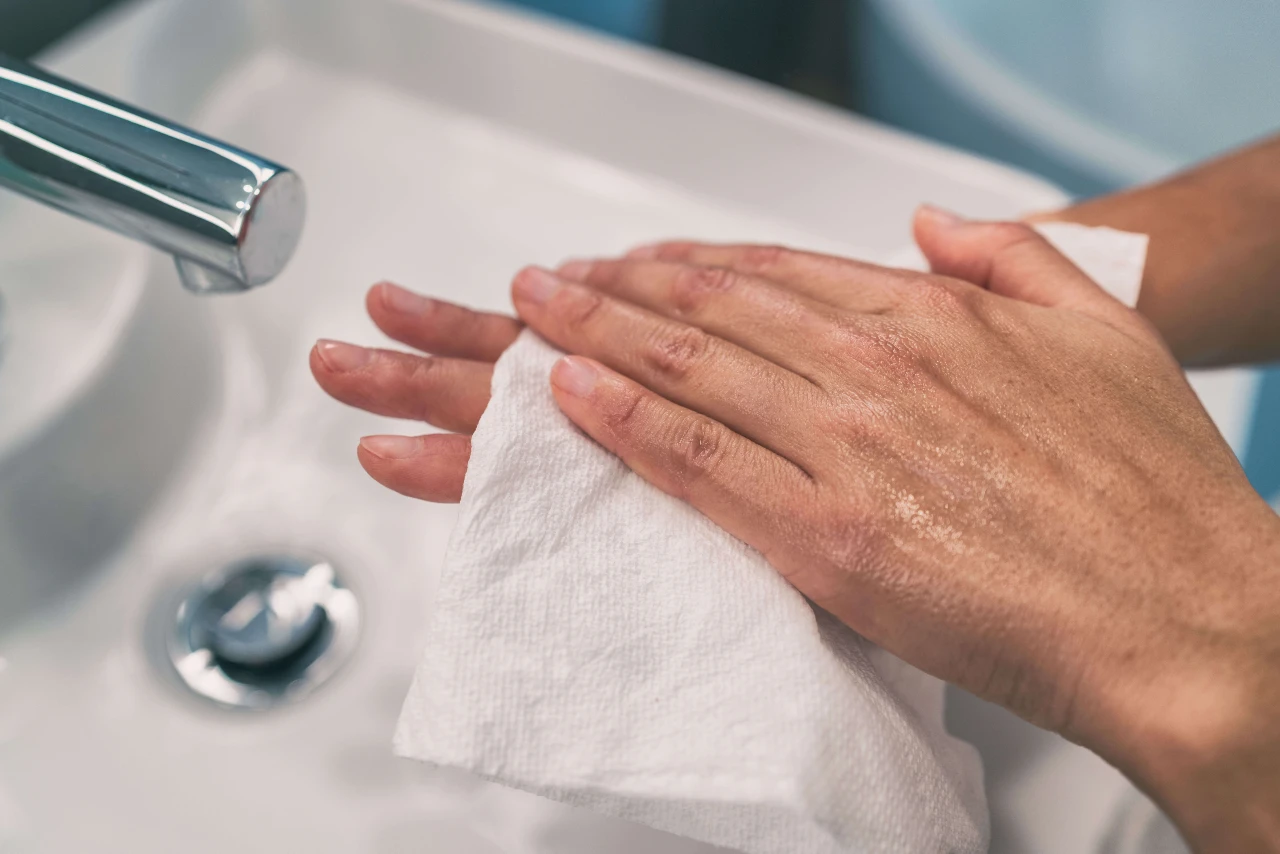
For example, paper hand drying methods can be one of the most effective methods to remove bacteria from fingertips, as they are only used once and are relatively risk-free in terms of re-contamination. However, this is only true if the paper towels are used and disposed of after a single use. Furthermore, paper methods can lack green credentials particularly if the towels aren't recyclable.
If we look at cotton or linen towels; the method is greener and effective for removing microorganisms and moisture off the hands (96% reduction in moisture in 10 seconds), but the re-contamination potential is higher if the towels are re-used.
Surprisingly, warm air dryers fare badly in tests and have actually been found to spread more microorganisms, making them unsuitable for both food and healthcare environments. In comparison, studies have found that jet blades have the highest risk of contamination at over 1,300 times more than paper towels.
The hand drying method selected by a business depends entirely on its priorities for the washroom in question. For instance, if the risk of cross contamination, the removal of moisture and microorganisms and maximising compliance are the main priorities to practise good hand hygiene, then a towel-based system is a good solution.
Equally, if a method is widely preferred by a business' employees, is energy efficient, reduces the maximum amount of moisture and microorganisms from the hands and is quick-to-use, then that method also makes a logical choice. For example, research has found that jet blades are more effective in moisture removal than warm air dryers and considered to more environmentally friendly than paper towels.
Whilst no individual hand drying method fulfils all the potential requirements for good hand hygiene, all should be managed and maintained appropriately. To understand the importance, cost, advantages and disadvantages of paper towel vs hand dryer methods as well as hand dryer germs download our report to find out more.
Initial's hand hygiene services ensure clean and hygienic hands with a range of solutions tailored to different environments