myInitial
Manage your business
myInitial login
In the dynamic world of business, where much focus is put on visual tools to enhance the customer experience, there’s an often-underestimated force at play: the power of scent. While visual branding and even catchy music or jingles have long held court, a sophisticated strategy known as scent marketing is increasingly taking centre stage.
This approach involves the deliberate use of fragrances to craft specific olfactory atmospheres in commercial environments, with the ultimate goal of subtly influencing consumer behaviour and enhancing sales.
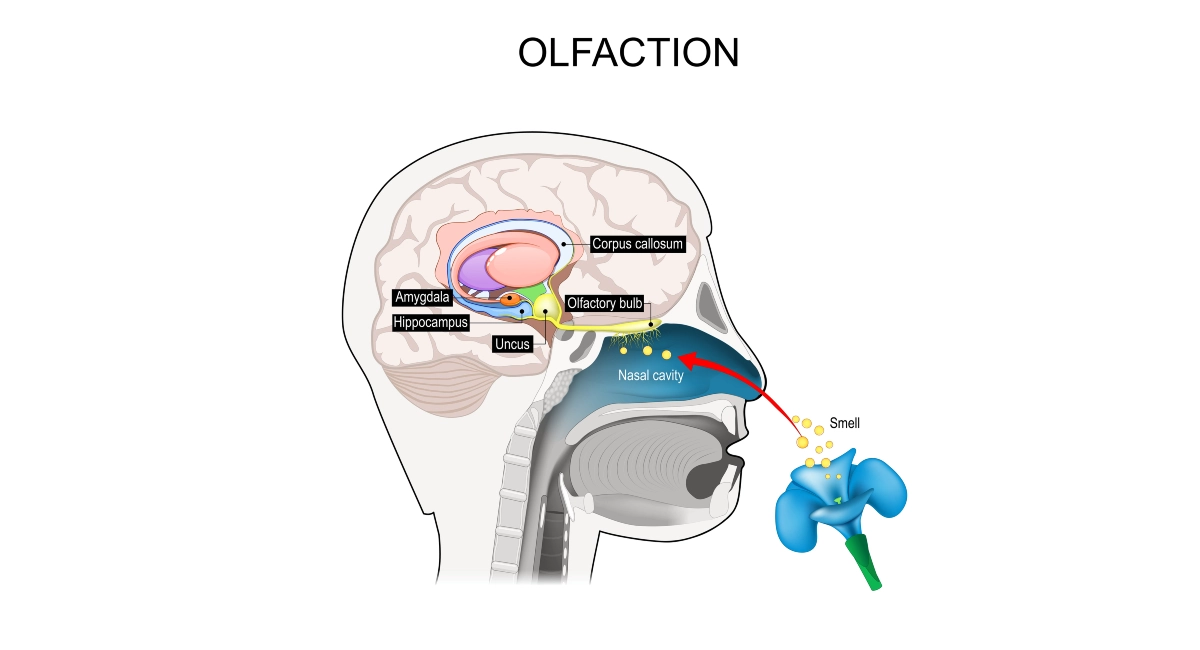
Unlike our other senses, olfaction, or smell, has a unique neural pathway to the brain, the nerve connections that transmit electrical signals. Scents bypass the brain's typical rational processing centres, with nerve connections going directly to the limbic system, the areas of the brain that govern emotion and memory. This direct connection allows scent to engage consumers on a deeply emotional level, often before they are even consciously aware of any persuasive intent.
This capacity for subconscious influence shows scent’s potential as a marketing tool and also potential ethical issues related to its ability to influence customer behaviour. Navigating this unseen influence necessitates an understanding of its scientific foundations, including how scents affect cognitive functions and shape perceptions.
Piriform cortex
This is the largest olfactory area and the brain's "initial processing centre" for smells. After receiving signals directly from the olfactory bulb, the piriform cortex analyses individual odours and even complex mixtures of them. It's good at telling different smell mixtures apart, even if they share some components, like being able to distinguish between the smell of a rose and a rose-scented candle.
The anterior part of the piriform cortex can identify complex mixtures separately from their individual components, while the posterior part helps you recognise similarities between different smells. This area also helps you notice new smells by quickly getting used to constant background odours, almost like filtering them out, so new ones stand out. Research also shows that it archives odour-linked memories. The piriform cortex sends its information to the amygdala and the orbitofrontal cortex.
Amygdala
This is like the brain's "emotional alarm and memory tagger" for smells. It processes emotional experiences and memories. Because smell information goes directly to the amygdala, it can quickly attach emotional meaning to a scent, whether it's pleasant, unpleasant, or even signals danger, like a predator's odour causing a prey animal to escape.
The amygdala is crucial for associative learning, meaning it helps you learn to connect a particular smell with a positive or negative experience, like how the smell of a certain food might remind you of a good or bad taste. This area also sends signals to parts of the brain that control automatic body responses, like changes in heart rate or skin conductance, linking smells to physical reactions. The amygdala is activated by both pleasant and unpleasant odours.
Hippocampus
Think of the hippocampus as your "memory librarian" for personally experienced events, especially those linked to a time and place. It receives smell information from the olfactory bulb, piriform cortex and amygdala. This means that smells can become deeply embedded in your long-term memories, particularly episodic memories – recollections of specific events from your past.
This is why a particular scent can transport you back to a vivid childhood memory, often with strong emotions attached. Damage to the hippocampus can impair a person's ability to learn associations between an odour and a place or remember the order of odour information. It is also involved in the regulation of stress.
Orbitofrontal cortex (OFC)
This brain region, also known as the prefrontal cortex (PFC) in primates, functions as the "smell evaluator and decision-maker". It determines how much you like or dislike a smell, essentially assigning it a "reward value". The OFC integrates smell information with input from other senses, such as taste, oral texture, and vision, to create a comprehensive picture, for example, assessing how rewarding a food item is. This assessment is essential for emotional responses and influences automatic bodily reactions, like changes in heart rate.
The OFC also participates in associative learning related to emotions and is activated by both pleasant and unpleasant odours, with its activation correlating with the perceived pleasantness or unpleasantness of the odour. Research indicates that this area can be activated by rewarding visual, auditory, olfactory, and taste stimuli, and these activations are related to how subjects subjectively report the stimuli's pleasantness or unpleasantness. Like the amygdala and hippocampus, the OFC also plays a role in regulating stress.

The use of scent isn't just about making a space smell pleasant; it's about harnessing a powerful psychological tool to enhance brand recognition, foster deeper customer loyalty, improve the perceived quality of products and environments, and ultimately drive positive business outcomes. The psychological effects of scents can be classified into three types.
The direct nerve linkage to parts of the brain is fundamental to understanding the significant and often immediate impact of scents on emotional states and memory recall. This phenomenon is popularly known as the "Proustian Effect", where a scent triggers vivid, detailed, and highly personal recollections of past events, often from distant childhood.
Scientific research has confirmed that memories evoked by scents are often more emotional, vivid, and create a stronger sensation of "being brought back in time" than those triggered by other senses. This is largely due to the direct, unfiltered access that olfactory cues have to the amygdala and hippocampus, which facilitates a strong binding of emotional content to olfactory memories.

Beyond triggering specific memories, scents can significantly influence an individual's current mood, stress levels, and overall psychological well-being. Different fragrances can elicit distinct psychological and physiological responses. For instance, lavender is recognised for its calming effects, while citrus and peppermint can be invigorating.
Positive odour-evoked memories can enhance positive emotions, alleviate negative moods and help reduce stress. However, it's crucial to acknowledge that odours can also trigger negative emotions and distressing memories, particularly for individuals with conditions like PTSD, where a scent linked to trauma can involuntarily evoke intense fear or flashbacks. This highlights the deeply personal and context-dependent nature of olfactory responses.
The influence of olfaction extends to various cognitive functions, including positive effects on attention, learning capacity, memory performance and problem-solving. Studies have shown that certain scents can induce measurable changes in brain wave patterns, suggesting that fragrances can actively shift cognitive states, making individuals more receptive, focused or relaxed.
In essence, the unique neural structure of the human olfactory system gives it a privileged and powerful role in our emotional and memory landscape. The many measured effects of pleasant scents range from subtle aromas encouraging customers to linger longer to specific scents that boost purchase intent. This makes our sense of smell an influential sensory gateway and a powerful tool for businesses to leverage to add an extra dimension to their marketing.
Scent meets strategy to transform your business.