myInitial
Manage your business
myInitial login
The author of this blog is Daniela Stiehler, the leading Air Purification Specialist at Rentokil Initial. With over 18 years of experience as an air care expert, Daniela’s accomplished professional history spans a range of industries and includes experience working as an Associate Principal Air Quality Engineer. So, we know we’re in safe hands passing the baton in this blog.
We breathe an estimated 20,000 litres of air a day, yet in my 18 years as an air quality expert, I’ve noticed that public awareness regarding indoor air pollutants or general air pollution can be quite low. I totally understand that – air is something you can’t see and often can’t smell, so why should it worry you?
However, the issue here is that despite its invisibility, indoor air quality is a concern – a big one. The importance of good indoor air quality surrounds us every day in relation to our comfort, productivity and, perhaps more importantly, our health and wellbeing. Indoor pollution has short-term and long-term health effects, ranging from airway irritation and headaches to cardiovascular and respiratory illnesses.
On 20 June, the UK’s National Clean Air Day raises awareness for one of the biggest environmental health risks we face: air pollution. At Initial, we’re joining in to consider the importance of clean air to protect our health and our planet. In this blog, we’re focusing on how outdoor pollutants impact indoor air and how you can help mitigate their effects.
The main pollutants we find in indoor air include particulate matter*, volatile organic compounds** (VOCs), CO2 and biological substances (like mould or fungi, caused by condensation or damp materials, and airborne viruses and bacteria). These pollutants can originate from both outside and inside, but a large number of particle sources can be found outside of a building. For example, particulates can enter through gaps in a building, at entry points or via open windows and mechanical ventilation systems.
A question I’m hearing a lot at the moment is about how outdoor pollutants linked to climate change are worsening indoor air quality, and various organisations do suggest there’s a correlation between the two. For example, the UK Health Security Agency has linked air pollution episodes to altering weather patterns and exacerbated heatwaves. Similarly, the CDC has also explored what they call ‘the climate-health connection’. One factor being brought to the forefront of narratives around climate change is extreme weather not just becoming more frequent but more severe, and extreme weather can have a massive influence on indoor air quality.
Even when there isn't a high level of pollution outside, caused by bushfires or dust winds, the temperature regulation of buildings will be the main driver in controlling indoor air quality. Heat waves with peak temperatures over 40°C will make it more energy efficient to increase the amount of recirculated air in mechanical ventilation systems. This reduces the CO₂ deployment factor and many airborne pollutants continue to thrive inside.
To take extreme heat for example, in recent months alone, we’ve seen widespread reporting of forest fires and other wildfires that continue to impact both humans and wildlife across the world. These fires can significantly impact indoor air quality, producing VOCs and particulate matter such as ash that can aggravate respiratory illnesses like asthma. Even in very clean, new, climate-neutral buildings with very little air exchange to the outside, there’s no possibility of a completely sealed bubble. There are always gaps – natural and unnatural gaps – that mean particles linked to extreme weather events can infiltrate and influence every type of building, even the very newest ones.
Changes made to how buildings are ventilated in response to severe weather events can lead to a higher proportion of indoor air being recirculated, potentially causing a buildup or concentration of pollutants in the indoor environment.
*particulate matter: fine solid particles or liquid droplets suspended in the air.
**Volatile Organic Compounds (VOCs): chemicals (often hazardous) that heat can cause to circulate through the air.
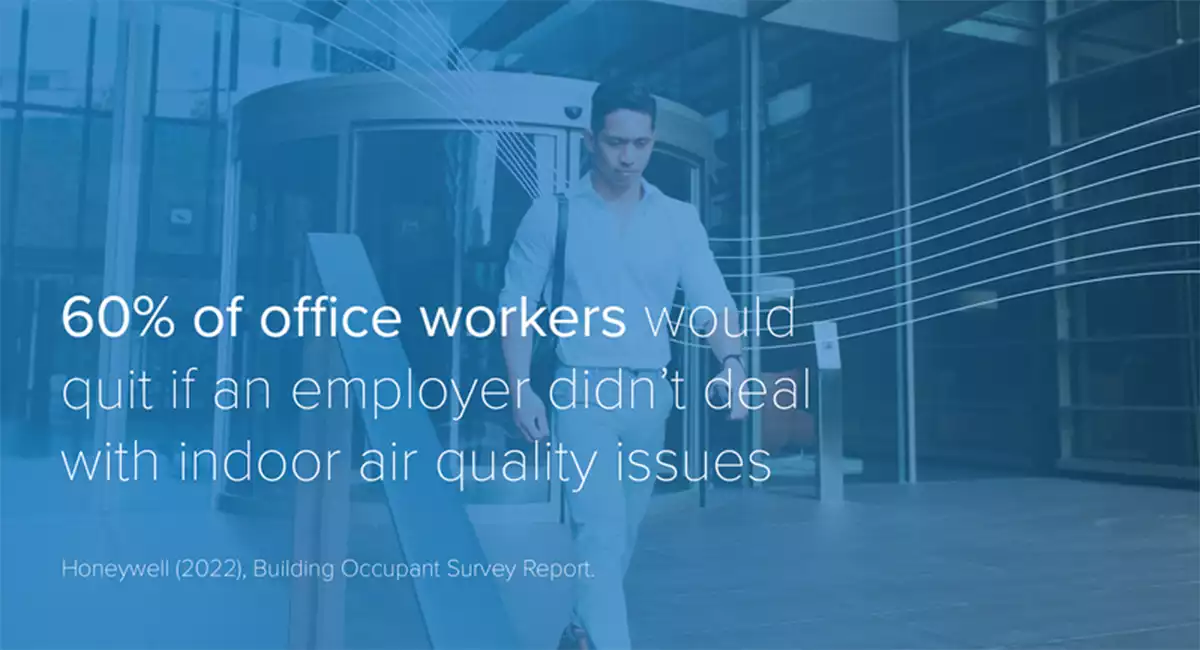
With an ever-increasing awareness of the importance of indoor air, more and more businesses are looking to improve their air quality for the health, wellbeing and productivity of their staff. It can be difficult to know quite where to start, but there are several actions you can take to develop a ‘clean air strategy’ that works for you. I recommend the following:
Air quality isn’t something that you can easily see and, therefore, act upon. However, there are devices that provide more visibility on the air in your setting by reporting on a number of metrics and gathering vital indoor air quality (IAQ) information such as levels of inorganic gases (CO2), volatile organic compounds (VOCs), particulate matter, airborne chemicals, air pressure, temperature, and humidity. With this insight, it’s easier to identify any air quality issues and the remediation measures that will be most effective.
A sensor deployment plan using these air quality monitors can also facilitate gap analysis over a period of time. I like to call this the ‘diagnosis of the patient’ because indoor air quality can fluctuate significantly, so this process gives a more holistic view of the air in a business and helps us make informed choices on the best treatments, including the impact of previous actions taken to improve indoor air. Based on this analysis, an indoor air quality plan that treats the areas of concern with the most appropriate solutions can be developed.
Air purification systems clean air by removing airborne particles, VOCs, inorganic gases and droplets which may contain microorganisms. They do so by passing air through filters that trap the contaminants and return the cleaned air to the room. Depending upon their filter quality, the device air discharge and clean air delivery rates (CADR), different devices offer different levels of air purification.
There are several factors I’d urge you to consider when choosing the right device for your business, but there are two key considerations that I think businesses often miss. The first is that many people use CADR – the clean air delivery rate – as a buying criterion for their air purifier. I tend to agree with this, but it doesn’t give you the holistic picture. It’s a good start when deciding on the floor coverage of the air purifier you’d like to purchase, but the standardised tests for CADR don’t give information on other factors, such as air discharge – how far and how quickly clean air is travelling from your device and into the affected space. Instead of relying solely upon CADRs, I’d always encourage you to look further into your device and find out how it’s been tested to ensure it performs well in a real-life setting.
My second recommendation is the importance of a serviced air purification solution as looking after your air purifier is just as important to ensure its ongoing effectiveness and efficacy. If you’re not realising it’s time for a filter change or that the device is blocked, you’re simply not getting the protection you expect from your device. An air purifier must be serviced regularly and safely with appropriate protective precautions. It’s not just a one-off purchase, so it’s worth looking for service packages where air purification experts recommend the best location for devices and inspect filters, clean them and check for any mechanical issues to minimise the risk of pollutants being redistributed into the air.
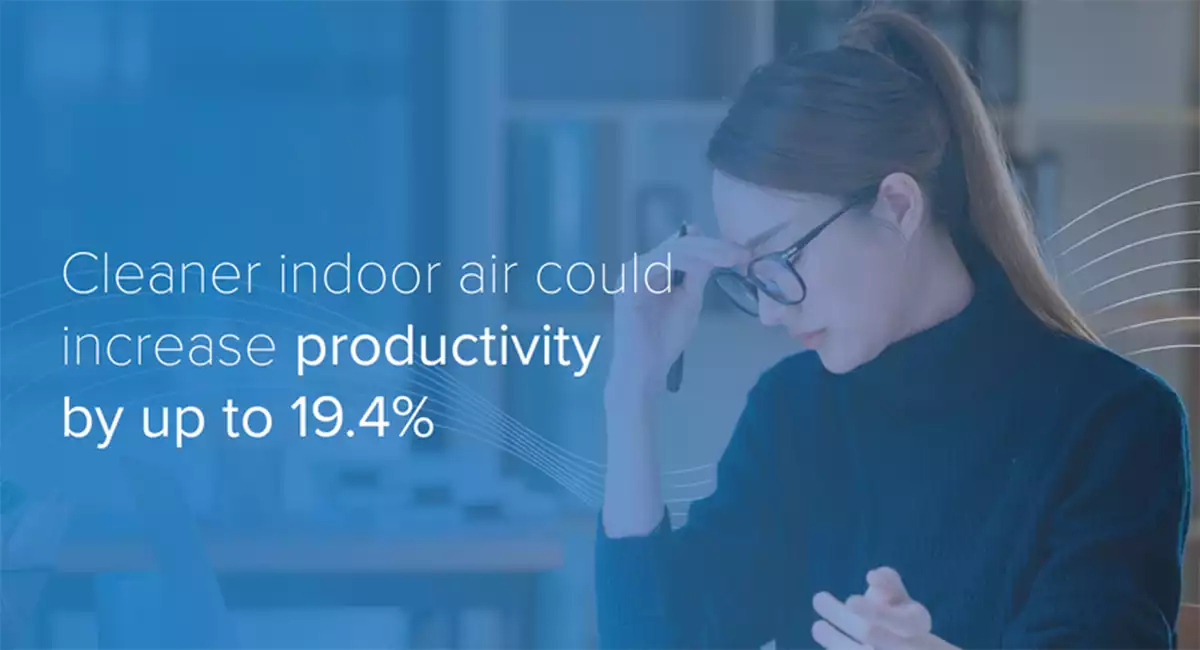
The air around us indoors is a complex topic, but the actions above can make a real difference. If you’re considering how to improve the air in your business, this Clean Air Day, I highly recommend reaching out to an organisation like Initial with the tools and insight to tailor an IAQ plan to your specific needs. By working together, we can create cleaner, safer indoor environments.

Interested in learning about how good indoor air quality can benefit your business? Find out how improving air quality in offices can translate into improved employee productivity and financial return in the report Initial recently commissioned. Click here to download.
With our advanced technology and expert knowledge, you can trust us to create a safer and cleaner space for your premises.