myInitial
Manage your business
myInitial login
Is it that time of year again already? In many parts of the world, students are ready to return to school, winter is on the way and cold-and-flu season is fast approaching, so hand hygiene might be on your mind.
Hands can play a role in spreading viruses and illnesses in your business. For example, if one of your employees caught a cold while at work, they were likely to have been exposed to an infected person or touched a contaminated surface. If they touched that infected surface and then touched their eyes, nose or mouth, germs could have been transferred germs into their body, making them unwell. It’s easily done, and viruses can spread quickly in busy environments when appropriate interventions and hygiene measures aren’t in place.
To learn a way to protect yourself and others in your business, keep reading as we explore the types of viruses that hands can pick up, how they can spread in a business’ washroom and the simple hand hygiene practices that can help combat them.

The study of virology (the study of viruses and viral diseases) is thought to have begun in the late 19th century with the discovery that certain diseases were caused by pathogens smaller than known bacteria. In the centuries following this, scientists discovered more about virus structures and their makeups.
We still don’t yet know everything about these complex entities, but a common classification you might hear in news reports is the differentiation between enveloped and non-enveloped viruses.
Knowing this difference is important because it affects how we can protect ourselves from them. For example, often the fat layer on enveloped viruses can be broken down by soap, making handwashing a way to combat them. Non-enveloped viruses have a more rigid shell, so they might be more challenging to defend against and require a different approach.

There are different transmission methods, but both enveloped and non-enveloped viruses can be spread by respiratory droplets, direct physical contact and contaminated surfaces.
Washrooms are used frequently by multiple people throughout the day, so they can be an area in your business that requires specific attention to stop the spread of germs. Cleaning regimes are essential to maintain hygiene standards, and there are also solutions and interventions that can help prevent bacteria and virus transmission in washrooms.
Germs in the air can be inhaled or can contaminate surfaces. If you’d like to improve the air in your washrooms, consider improving the ventilation (such as opening windows more frequently).
Consider how many different objects an individual touches in a single visit to the toilet — the door handle, lock mechanism, toilet seat, paper dispenser, sanitation units and flush handle. Users can transfer germs at these touchpoints or release them via the ‘toilet sneeze’ when they don’t close the toilet lid when flushing.
To reduce these touchpoints, dispensers that control the distribution of toilet paper can provide a barrier to help prevent cross-contamination. No-touch sanitary waste units can even remove a touchpoint from the cubicle entirely.
Many of us are guilty of scrolling on our phones while using the toilet, but any objects — such as phones or papers — brought into washrooms and put onto a surface risk cross-contamination.
Encouraging users to minimise the number of items they take into a washroom can be an important step in maintaining surface hygiene.
Door handles are a hotspot for cross-contamination in buildings, and washrooms are no different. Although it's important to include handles in cleaning regimes, antibacterial covers and pedal solutions can protect people from touching them directly.
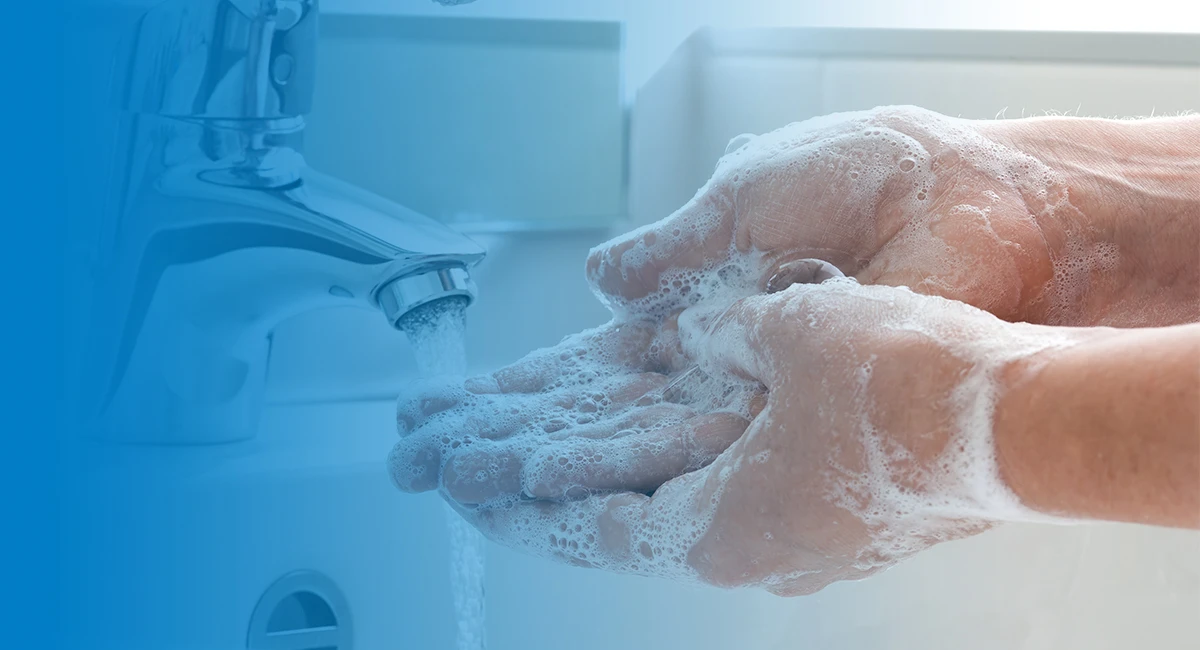
As we’ve learned, washrooms can be spaces where germs spread. But washrooms are also places where hand hygiene can step in to combat bacteria and viruses.
1 Smith and Lokhorst (2009) as cited in Alharbi, S A et al. (2016) Assessment of the bacterial contamination of hand air dryer in washrooms. Saudi Journal of Biological Sciences, 23(2), pages 268–271

Giving your employees, students or colleagues the hygiene solutions they need in washrooms and providing education about the benefits of handwashing can help you promote good hand hygiene.
To get started, why not download our free resources that can help you support effective handwashing?
You’ve heard why hand hygiene can be your business’ first line of defence against bacteria and viruses, so make sure you’re providing the solutions that support it. To learn more about hygiene solutions that can help protect the people in your business, click here.
Hand hygiene solutions for your business Initial supports business with hand hygiene by providing a wide range of solutions to suit all industries