myInitial
Manage your business
myInitial login
Do you ever find it hard to make better choices for the environment amid so much messaging? If so, you’re not alone. The amount of information out there on ‘greener’ business operations can be confusing. Luckily for all of us, there is a solution. By making it much easier to compare products and services that claim to have reduced environmental impact, sustainability labels and accreditations can help steer eco-conscious purchasing decisions.
As Jason Lannie, Rentokil Initial’s Group Safety, Health and Environment Director, states: “Ecolabels are an important source of trust. These labels provide a clear and credible way to inform colleagues and customers that the product is environmentally responsible while reinforcing and strengthening our reputation as a leader in sustainable hygiene.”
According to the Ecolabel Index, over 450* ecolabels exist across 199 countries and 25 industry sectors. In this blog, we’re exploring one of the most highly regarded ecolabels, EU Ecolabel – read on to find out what this accreditation is, what it takes to achieve it and how it can support sustainable decision-making in your business.
*total correct as of January 2024
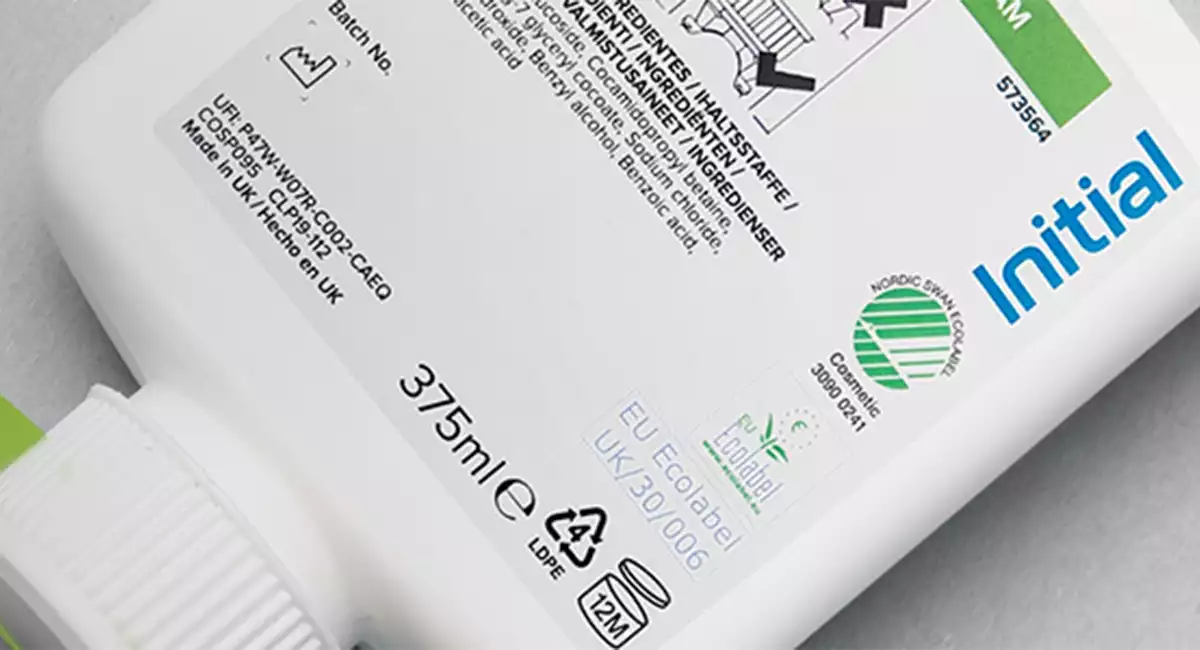
Overseen by The European Commission, EU Ecolabel is a voluntary scheme providing environmental performance certification and labelling to businesses. Since 1992, EU Ecolabel has encouraged greater sustainability within companies, using standardised processes to assess, award and promote goods and services that demonstrate environmental excellence. As of September 2023, 88,921 products on the EU market have achieved their prestigious rating.
To achieve the accreditation, verified, independent experts assess criteria such as extended usability, reusability and toxicity during certification. After this assessment, the EU Ecolabel logo – the iconic “EU flower” symbol – can be displayed only when a product, good or service has met the highest environmental standard. Performance is also a criterion to achieve this honour, so this logo signals to consumers, retailers and businesses that they’re making a sustainable, effective choice.
The criteria for obtaining the EU Ecolabel rating vary among product categories, but all emphasise minimal chemical use, reduced environmental impact from toxic substances and CO2 emissions during production, low energy and water consumption and effective waste reduction via recycling.
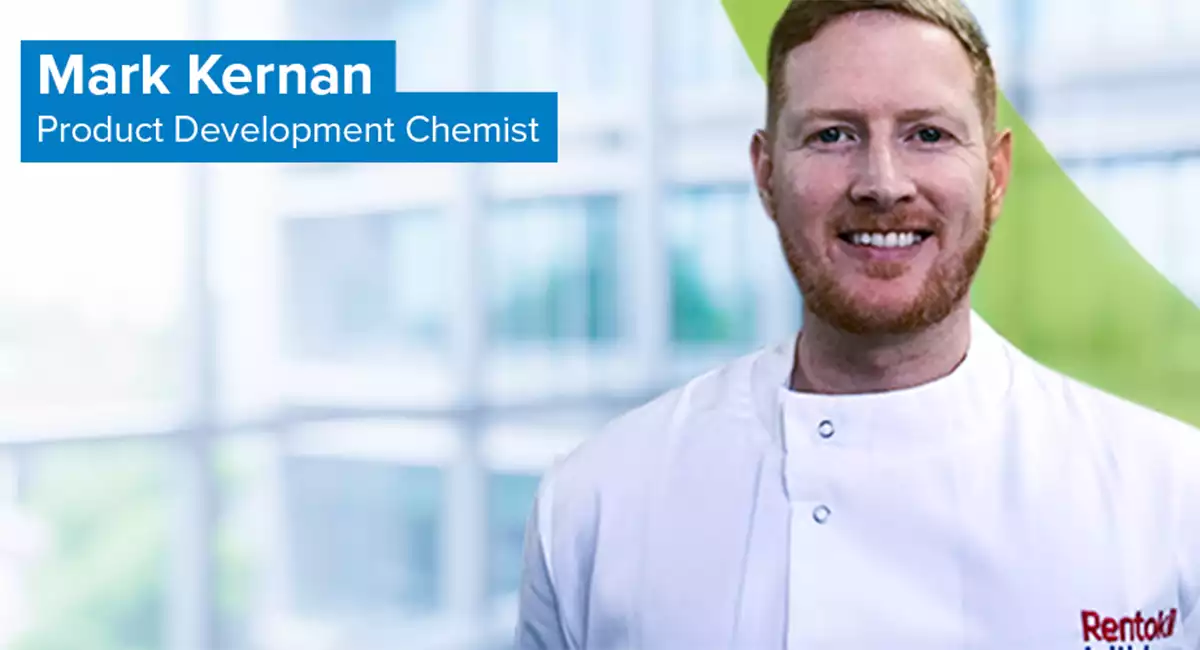
Here at Initial, we first achieved EU Ecolabel across our handwash range in 2013 and have maintained it every year since. Hear from Mark Kernan, one of our Product Development Chemists, on what this process has involved:
The requirements to achieve the EU Ecolabel are regularly revised, making them more stringent, keeping them up to date on developments in sustainability and ensuring that they continue to push businesses to make ‘greener’ choices. This means that, as a business that's achieved accreditation status, we undergo regular reformulation to keep our soaps in line with the latest EU Ecolabel guidelines.
Fundamentally, EU Ecolabel’s operations embody their motto, ‘environmentally conscious purchasing decisions made easy’. As a trusted and reliable assessor of sustainability, next time you’re acquiring a new product, service or supplier, looking out for the EU Ecolabel logo can help you feel confident that you’re making a sustainable choice.
To take Initial as an example, our core range of soaps was formulated specifically with EU Ecolabel in mind. With a focus on being both kind to skin and the planet, the soaps don’t contain silicones, parabens, dyes or microplastics and have demonstrated a reduced environmental impact during the entire product development process. From the extraction of raw materials to production, use and disposal, our EU Ecolabel rating means you can rest assured that you’re making an eco-conscious decision when you choose us as your hygiene services provider.

At our parent company, Rentokil Initial, we use sustainability labels and accreditations, such as EU Ecolabel, as part of a much wider commitment. In 2020, we developed our Environmental Action Plan to deliver our goal of net zero emissions across our operations by 2040. Aligned to activities from the UN Sustainable Development Goals, we’re driving change under three “pillars”: sustainable solutions, sustainable operations and sustainable workplace.
Under the operations pillar, we’re not only using sustainability labels to assess our own business but are also using these accreditations to consider the environmental impact of our suppliers. With a focus on creating an environmentally responsible supply chain, all of our critical suppliers have either achieved official environmental labels or accreditations such as EU Ecolabel or meet the criteria set in our internal sustainability rating system.
We’re on a mission to develop effective hygiene solutions that make the spaces people visit and work in safer and healthier while helping to preserve our planet. This means delivering sustainable hygiene solutions to more businesses globally and taking the necessary steps across our product development process, operations and ongoing partnerships to help our customers tackle their environmental impact. To learn more about how we can support your sustainability goals, click here.
From washroom hygiene to air purification, Initial solutions are designed to create a safer and healthier environment for your peace of mind